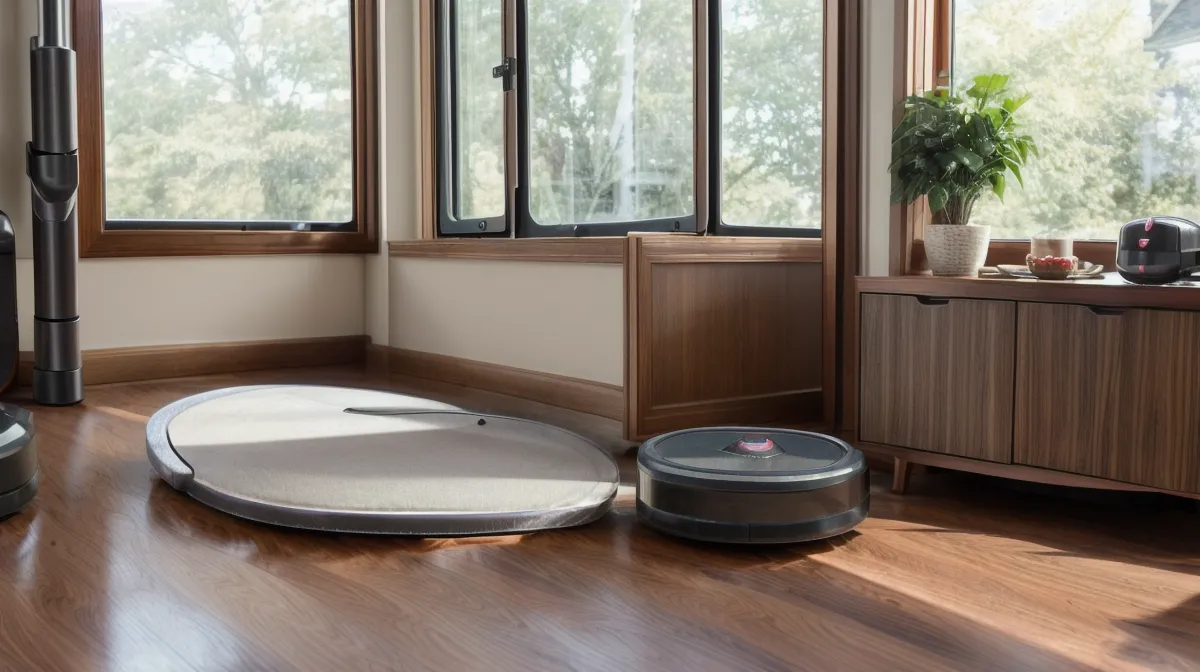
Late one evening, I was sitting cross-legged on our living room rug with a pair of tiny sewing scissors, methodically snipping six-inch strands of my own hair wrapped around a seized vacuum roller. Murph, our husky mix, lay three feet away, shedding what looked like an entire spare coat directly onto the floorboards.
Before we dive in, a quick heads-up: I earn a commission if you click through and purchase via the links here, at no extra cost to you. I personally tested every unit mentioned across our 1920s craftsman bungalow, weighing dustbins on a kitchen scale and logging daily jams. If a bot choked on a rug fringe or choked on dog fluff, I documented it without sugarcoating.
The Hair Dilemma in an Old Craftsman Bungalow
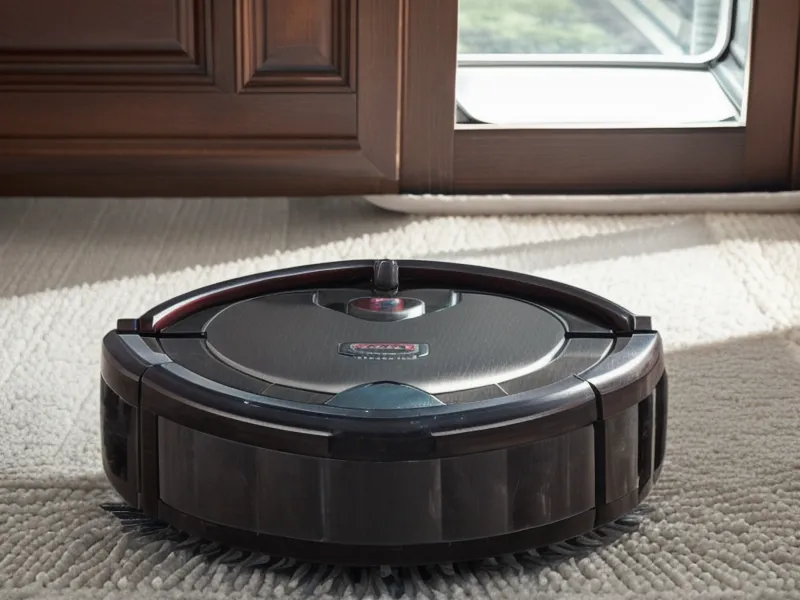
When you combine long human hair with double-coated dog fur, standard robot vacuums surrender remarkably fast. In our house, Murph sheds fine, airborne undercoat in billowing drifts, while Beans, our senior beagle, drops stiff, needle-like hairs that weave into textile weaves. Throw my own shoulder-length hair into that mix, and traditional bristle brushrolls end up bound tight within forty-eight hours.
The problem is mechanical. Traditional bristles catch strands at their midpoints, winding them into rock-hard knots around the roller bearing until the motor stalls. dual counter-rotating rubber extractors handle this differently: their continuous rubber fins flex rather than grab, driving strands outward toward the roller ends where they can be slipped off easily rather than anchoring across the drive shaft. You can read more about this in my breakdown of the 'tangle-free' brush roll myth.
That mechanical relief only solves half the equation. The other half is getting that dense bundle of pet fur and long hair out of the vacuum and into a bin without human intervention. Robot vacuum auto-empty docks rely on a sealed high-pressure evacuation channel; any air leak at the canister seal degrades suction and leaves pet hair stranded in the on-board bin, resulting in an endless cycle of error pings.
Testing the Main Contenders on Real Floors
Starting early spring and tracking through late autumn 2026—about eight months of daily runs—I put three primary self-emptying contenders through their paces: the iRobot Roomba j7+, the LG CordZero Robot, and the Roborock S8 Pro Ultra.
The LG CordZero brought serious three-stage suction to our dining room's dark oak planks and the high-pile runner in the hall. Its dock emptied cleanly for days at a time without clogging. But after about ten runs, its brushroll demanded manual unwinding because my hair still wrapped stubbornly around the center axle. If you want more granular data on that specific machine, check my notes on which self-emptying robot survives a two-dog house.
Meanwhile, the Roborock S8 Pro Ultra mapped our labyrinthine hallway almost instantly. Its dual rollers handled Murph’s fur like a champ, and the mop pad lift feature is the only thing that earned an audible cheer from Sam when it cleared our vintage living room rug without soaking the wool. Yet the Roborock companion app felt like navigating an airline booking portal with twenty-eight nested toggles, creating unnecessary friction just to send the bot to spot-clean under the dining table.
Why the Roomba j7+ Remains the Pragmatic Choice
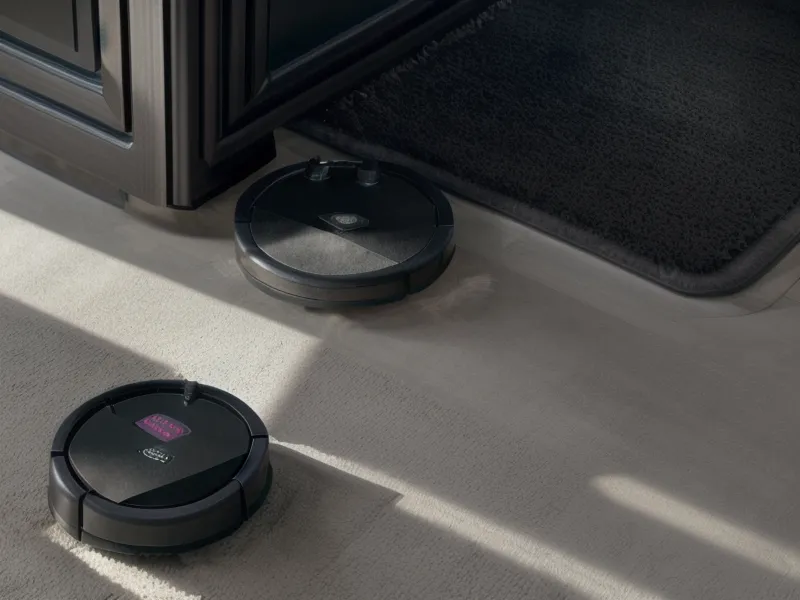
The iRobot Roomba j7+ emerged as the front-runner for one simple reason: predictable floor hygiene without daily babysitting. Its twin rubber extractors don't just tolerate mixed hair lengths—they process them cleanly. The front-facing camera with obstacle recognition is also the only system that saved us during a midnight emergency when Beans had a violent disagreement with an upset stomach on the hallway rug. Other bots would have dragged that mess from room to room, but the j7+ quietly flagged the obstacle, navigated around it, and finished its loop.
Its Clean Base auto-empty dock also features the tightest evacuation seal I tested. When the base fires up, it sounds like an aircraft engine for ten seconds, but the velocity completely clears the on-board bin. Even when Murph was blowing his coat mid-summer and the dustbin was compressed into dense felt, the base pulled it through without a single manual poke.
Along the way, managing household pet dander also meant adding secondary defenses. While the vacuums dealt with floor debris, we kept the air clear using the PuroAir HEPA 14 Air Purifier. Its medical-grade filter claims a 99.995% particulate efficiency rating down to tiny airborne particles, and on sleep mode it hovered around a 28 dB whisper—quiet enough that Beans slept peacefully right beside it. For basic home alerts, we also mounted the X-Sense Smart Smoke and CO Detector, which links over standard 2.4 GHz home Wi-Fi bands to ping our phones before a false alarm can terrify the dogs.
The Hidden Trade-Off: Clean Hands vs. Recurring Bags
Here is the reality nobody explains clearly: auto-emptying frequency increases your day-to-day convenience, but it forces a continuous trade-off in proprietary disposal bags. With a manual dustbin, you dump it directly into the kitchen trash twice a day. It is dusty, pet dander floats back into the room, and hair gets trapped around the internal filter hinges. An auto-empty base completely isolates that dust inside an enclosed bag.
However, running two shedding dogs and long hair means that self-empty cycle runs every single afternoon. Those bags fill up faster than expected. You are essentially trading three minutes of messy manual bin scraping for the recurring chore of stocking and tossing sealed dock bags. For our sanity, keeping the dander sealed inside the dock was worth every penny, but you should check current pricing on replacement bags on the vendor's page before assuming the dock is entirely maintenance-free. If you are debating a full setup, check out my long-term review of pet hair vacuums.
Final Verdict on Conquering Hair-Covered Floors
One rainy evening last month, after about three weeks of letting the schedule run untouched, Sam walked into the kitchen and asked when I had last swept the hallway. I realized I hadn't touched a broom or a pair of sewing scissors in nearly a month. That silence—and the absence of tangled roller bearings—is the true benchmark of a dependable vacuum.
If your home is battling thick canine undercoat, fine shedding, and long human strands, the iRobot Roomba j7+ handles that specific mechanical friction better than the competition. Its obstacle avoidance keeps it from eating rogue phone chargers, its rubber extractors shed hair to the ends without binding, and its dock actually empties what it collects. Check the current pricing on the vendor's site, set the schedule, and leave the sewing scissors in the drawer.
| Product | Rating | |
|---|---|---|
| iRobot Roomba j7+ Top Pick | 8.8 | Read More → |
| LG CordZero Robot | 8.5 | Read More → |
| Roborock S8 Pro Ultra | 8.2 | Read More → |
| PuroAir HEPA 14 Air Purifier | 8.0 | Read More → |
| X-Sense Smart Smoke and CO Detector | 7.9 | Read More → |
iRobot Roomba j7+
Pros
- + Pet-poop avoidance actually worked the one time the beagle lost a midnight argument with a Greenie
- + Auto-empty base has the strongest seal of the five self-empty bots we tried -- no leaked dust around the dock
- + Dual rubber extractors let long human hair slide to the ends instead of seizing the motor core
Cons
- − No-go zone editor forces you to redo boundaries whenever the map re-saves
- − Subscription nag for the app Premium tier pops up periodically even after declining