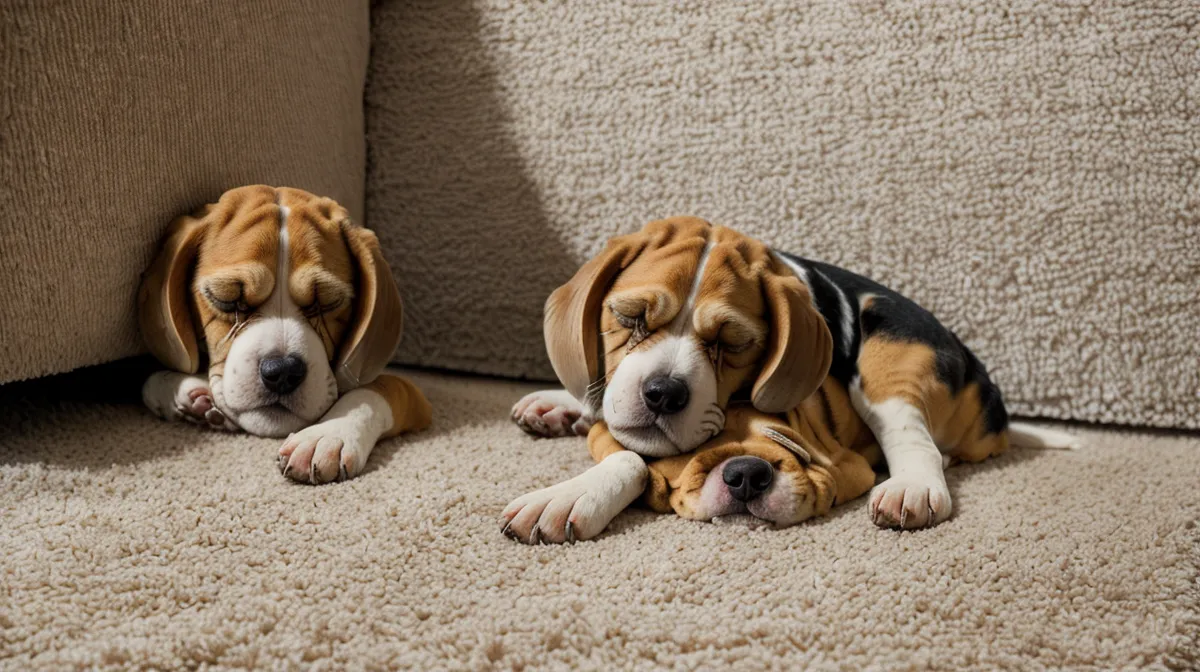
Beans shakes out mid-stride and a fresh cloud of beagle dander lifts off her back before I've even reached for the purifier dial. This happens more times a day than I've admitted to Sam. That's the whole case for running an air purifier in an older home like ours: the dust doesn't wait for a convenient moment, and a house this old doesn't have the sealed ductwork that lets a newer build filter it out on its own.
Quick disclosure before anything else: some of the links ahead — for things like the Roomba and the PuroAir — are affiliate links, and I get a small cut if you buy through them at no extra cost to you. Everything past that comes straight from the dustbin tally I've been keeping since I started tracking this stuff, and the list of what flat-out didn't work is just as real as the list of what did.
Why You Need a Purifier Even With a Robot Vacuum
A reader named Brenley Hessler asked the obvious follow-up right after sending over yet another set of unsolicited before-and-after dustbin photos: if a vacuum runs every day, does something like the PuroAir HEPA 14 even matter? It does, because a vacuum and a purifier aren't measuring the same problem. Dustbin capacity tells you how much a bot can hold before it needs to dump, and that number has nothing to do with how long a filter lasts against airborne dander. Mapping accuracy decides whether a robot finds every square foot of a room, and it says nothing about what's still suspended in the air by the time it gets there. Suction strength trades against battery life on every bot I've run, and neither side of that trade-off touches what's floating instead of settled. A mop pad reaching under the baseboards solves a floor problem, not an air problem, and even a bot that's nailed pet-waste avoidance still leaves the same haze hanging around once it's done.
That gap is tangled up with a failure I still bring up whenever someone tells me the app handles it. The ECOVACS app used to let me draw virtual no-go zones around problem spots, then quietly reset them overnight without any warning, so trusting an app to manage anything long-term stopped being an option for me a while back, whether for vacuum or purifier. I've watched Murph flop back down onto a floor I cleaned less than an hour earlier and somehow the dander is already resettling like the vacuum was never there. That's the gap a purifier is built to close.
What a Hundred-Year-Old House Adds to the Dander Problem
Plaster walls and original lath change the math in a way most filter marketing doesn't account for. A newer build with drywall and sealed HVAC keeps a fairly closed system; a house like ours breathes through gaps a century of settling has opened up, so dust that isn't dog-related at all ends up sharing the same filter load as Beans' shedding. I found the managing dust in a craftsman bungalow breakdown useful for the non-pet side of that equation, since the dander is honestly the easier half to solve for.
What HEPA 14 Actually Does for Beagle Dander
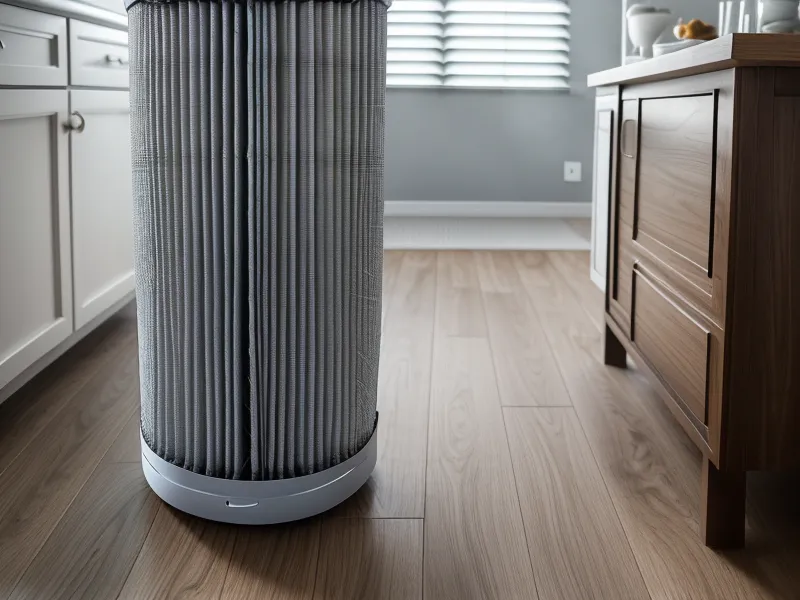
Beagles carry a dense double coat that sheds an oily, sticky dander, and that texture is part of why a basic filter clogs faster in this house than it would in a single-cat apartment. The HEPA 14 grade on the PuroAir is a step up from the HEPA 13 rating most consumer purifiers carry, and I noticed the difference in how fast the filter itself looked dirty after switching over from a basic model I used to run. Whether that finer grade is actually worth the pricier replacement cartridge once beagle dander is the main particle load is a longer question than fits here, and I'm not answering it in full in this post. Where the unit actually sits changes its output more than people expect, too, and I broke that down separately in the optimal placement guide instead of repeating the whole argument here.
Sleeping Through Sleep Mode
Sam sleeps through nearly all of my late-night test cycles, which sounds like a throwaway detail but it's actually the reason I trust my own noise-tolerance notes — if a purifier keeps him asleep at that hour, that's a more honest bar than my own opinion. On its lowest setting, the PuroAir read 28 dB on the NIOSH app on my phone, close enough to background room noise that neither the dogs nor Sam register it as an event. Compare that to the Roomba j7+, which sounds like a small aircraft taking off the second it empties its bin into the base — great for the daily fur haul, useless for anyone trying to sleep through it. Running the purifier on high for twenty minutes right after a vacuum pass, especially near the baseboards, is the sequence that actually keeps the air clear instead of just the floor. The full decibel breakdown across settings is in a separate PuroAir noise level test if you want the details.
There's Always an App Gripe
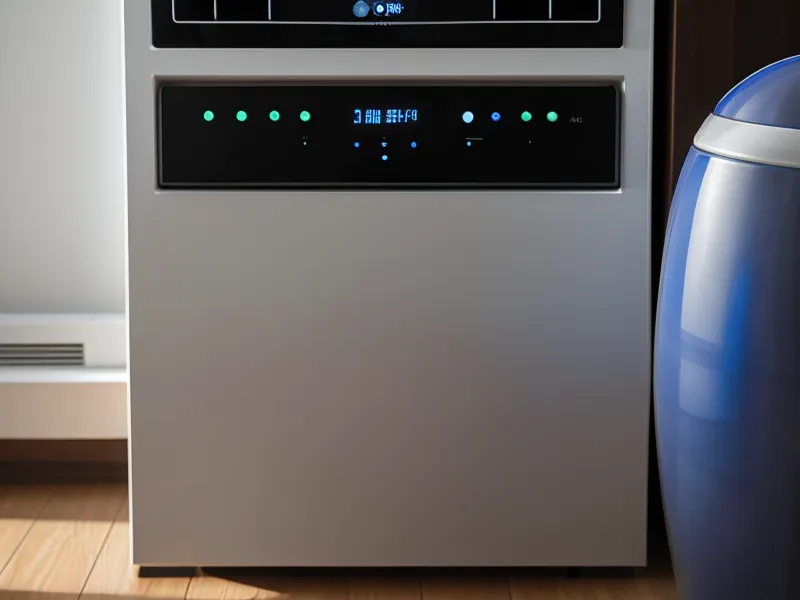
The PuroAir HEPA 14's plastic shell feels noticeably cheaper than its price bracket suggests, especially set next to something built like the LG CordZero, but the bigger issue for me is the missing app. There isn't one, really — just a physical timer dial on the unit, no account setup, no onboarding flow trying to collect an email address before it'll even turn on. "I don't have to find my phone just to turn a fan down," Sam said, and he's not wrong. I'm the one who wanted it to sync with the X-Sense Smart Detectors already wired into the hallway, though figuring out where those actually belong in a two-story older home is its own placement question, separate from anything about air filtration.
Fast Answers to What People Actually Ask
How often does the filter actually need replacing in a house like this? More often than the manufacturer's generic estimate for a pet-free new build — plaster dust and two shedding dogs both load the filter faster, so budget for swapping it out well ahead of whatever number is printed on the box. Does it get rid of the "wet dog" smell that settles into old floorboards? Not on its own, and it won't replace an actual bath, but it noticeably cuts how much of that smell lingers in a room after the dogs leave it. Is it better than just running the Roborock S8 Pro Ultra more often? They're not competing for the same job: the Roborock handles what's visible on the rug, and the purifier handles what you'd otherwise be breathing in after it's done.
If the dander haze over Beans' favorite spot is the thing that finally pushes you toward buying one, the PuroAir HEPA 14 is the first unit in this lineup that hasn't choked on what this particular house puts into the air. It's plain, the shell feels a little plasticky for the segment, and it's still the one thing currently keeping that dander from taking over the bedroom too.