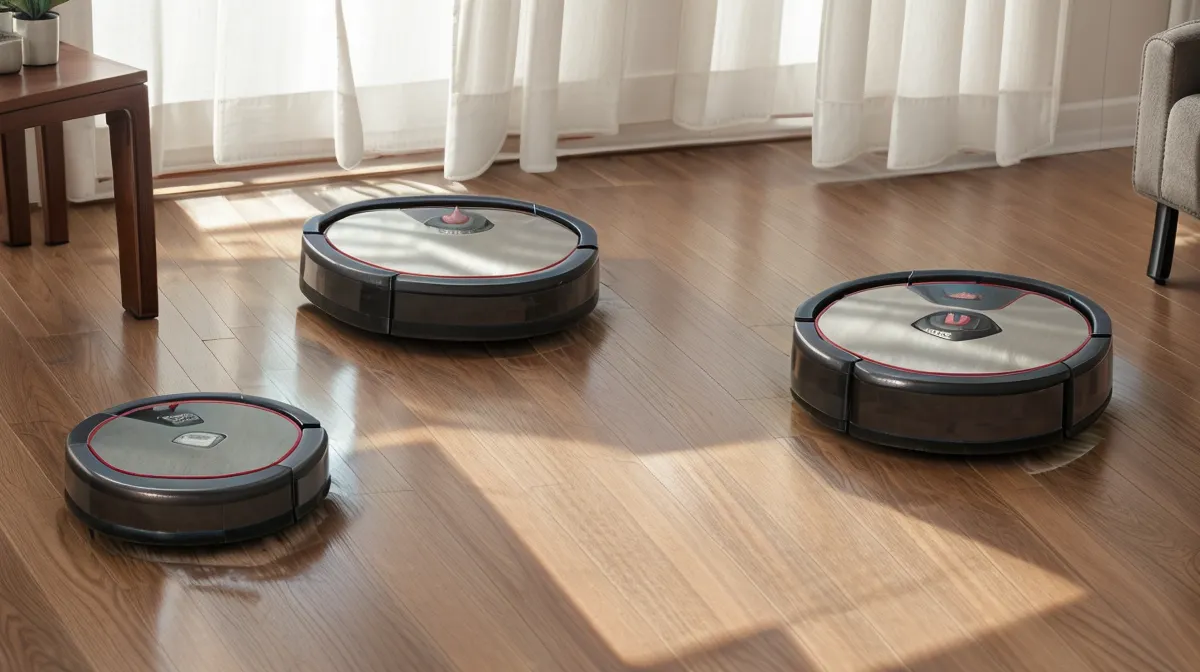
Where does an air purifier actually need to sit in a house with two shedding dogs and one dramatic husky mix? I've been chasing that answer since my PuroAir sat in the one living-room corner I loved on sight, tidy but doing nothing about the dander drifting over the rug in plain daylight. Good air purifier placement is not obvious, indoor air quality is not something you eyeball, and it took plenty of failed pet dander solutions before I trusted instinct over a store diagram.
Quick disclosure before any of that: some of the links below — the Roomba, the PuroAir, the X-Sense detector — are affiliate links, and I earn a commission if you buy through them, at no extra cost to you. It funds the replacement filters I go through faster than I'd like to admit, and every failure story here happened to my own gear first.
The short version, if you want it before the rest: corners are the enemy, airflow paths win, and where the purifier sits matters more than which model you bought. The long version is everything below, organized around the actual questions people send me once they find the dustbin tally and realize I track indoor air quality right alongside it.
Why Doesn't a Corner Placement Work for Pet Dander?
Every corner in an old house looks like the responsible, tidy option, and every one of them is wrong for the same reason: air stagnates there. The LG CordZero handles the hair that's already settled on the floor — that's a hair problem, not an air problem. What's still floating is a separate fight, and the PuroAir HEPA 14 Air Purifier is what I run for that specifically.
Houses built with lath and plaster walls trap air in pockets that no placement diagram ever shows you, and a corner is usually the deepest pocket in the room. I know that dead-zone feeling from watching a robot vacuum stall in one long before I ever thought about air. The readout would drop to seventy-three percent in the exact same hallway corner, run after run, and for a while I blamed the battery. It wasn't the battery. It was the corner.
I get into how the HEPA 14 grade actually performs against dog dander over in testing the PuroAir HEPA 14 for persistent dog dander, so I'll skip the filtration math here and stick to placement.
The Clearance Number Nobody Puts on the Box
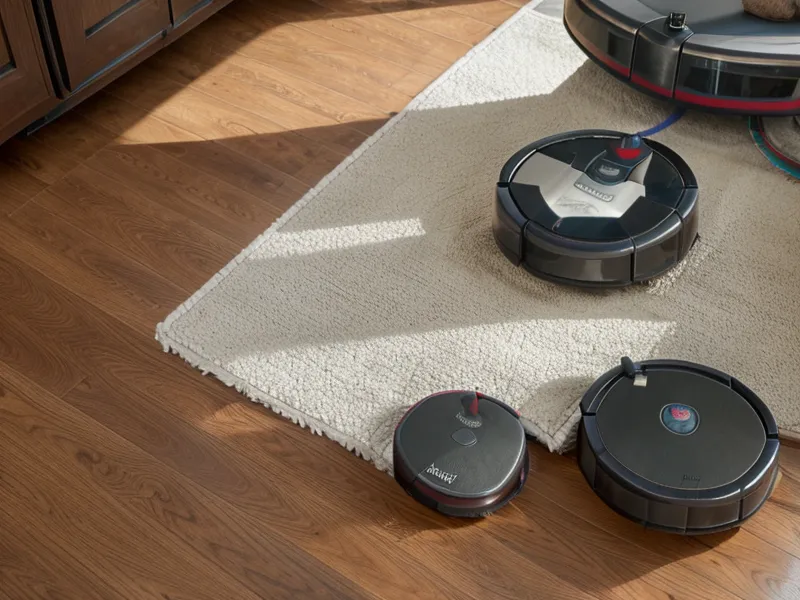
Twelve to eighteen inches of clearance on every side is the number I've settled on, and it's less generous than it sounds once you measure an actual room. Push the unit against a wall or wedge it behind a chair, and you're paying full price for a Clean Air Delivery Rate you're not getting — the intake just pulls whatever's closest, which in a shedding-dog house is upholstery fiber instead of the dander actually floating mid-room. Furniture problems mostly fix themselves once you stop treating an air purifier like a lamp you're arranging for symmetry.
Does It Matter If the Purifier Sits Near the Robot Vacuum Dock?
Brenley, a regular in the r/robotvacuums thread with two Labradors and her own running spreadsheet of dustbin weights, asked me this one directly: does it matter if the purifier sits near the vacuum's dock? It does, and not in the direction most people guess.
Our iRobot Roomba j7+ auto-empties into a sealed bin, and every time it docks, a small plume of dust escapes that seal. Park a purifier too close, and it ramps to max speed but just stirs that plume into a vortex instead of catching it cleanly — more noise, not more clean air. Whether the j7+'s poop-avoidance sensor actually holds up under real conditions is a story I've told in full elsewhere, and whether its dustbin fills faster than it should over the course of a week is its own spreadsheet entirely.
Move the purifier a few feet off to the side of the dock instead — still inside the same airflow path — and it catches that plume without fighting it. The same logic covers where the robot vacuum runs afterward: dander caught in the air before it settles is dander that bot never has to dig out of the carpet fibers later.
Hallways Beat Bedrooms and Corners for Full-Time Placement
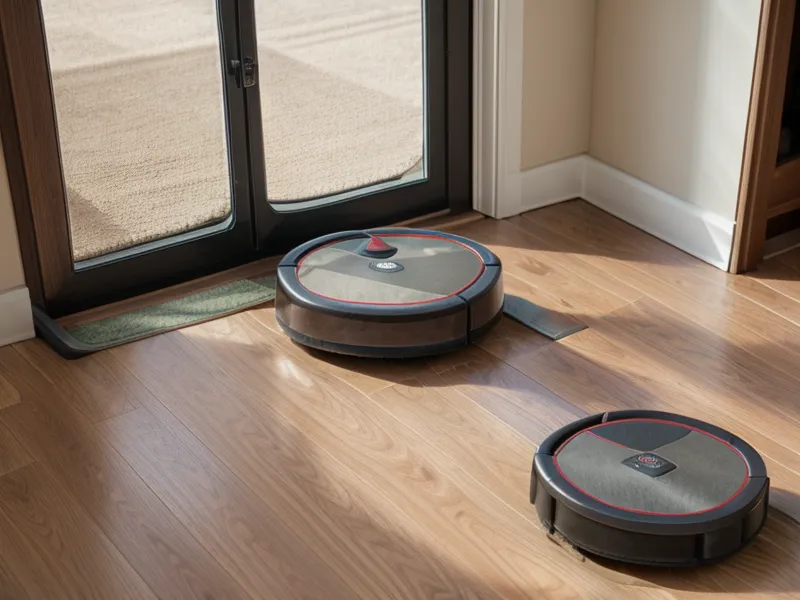
Hallways win because they sit on the actual draft path between rooms, not because they're convenient. Three feet of open space in every direction, positioned in that path, is the rule I actually use now — not a corner, not tucked against a doorframe, just open air moving through freely.
Keep it roughly five feet from wherever Murph or Beans actually nap for hours: close enough to catch shed dander as it happens, but far enough that it isn't just reprocessing the same fur pile on a loop. Noise matters here too. Sam sleeps through almost anything, so when the sleep-mode hum (measured at 28 decibels, three feet from the hallway doorway) doesn't wake him, that tells me more about whether a spot works long-term than any spec sheet does.
None of this depends on which vacuum runs alongside it. Whether you'd rather have raw suction or longer battery runtime in a house this size is its own trade-off I've measured on the LG separately, and how confidently any of these bots map a bungalow's thresholds is a different question from air quality entirely.
What About the Smart Home Overlap — Detectors, Apps, and 2.4GHz?
Every smart device in this house fights the same 2.4GHz-only battle, the PuroAir included. If you've paired something like the X-Sense Smart Smoke and CO Detector, you already know the drill of dropping your router down a band. Where you actually mount a smoke or CO detector has its own separate rulebook I've written up elsewhere, and it isn't the same math as air purifier placement, so I won't fold it in here.
The PuroAir's own app is thin. A basic timer. No real scheduling, nothing that could substitute for actually picking the right spot in the first place. I made close to that exact mistake once with an old Roomba i3 — put it on a strict daily timer instead of thinking through its actual path, then came home to find it wedged against a doorframe, easily three house-lengths from its dock by my rough count, going nowhere until I physically freed it.
A timer doesn't fix a bad location, on a vacuum or a purifier, and a fancier app doesn't either. The Roborock S8 Pro Ultra runs genuinely more capable software than the PuroAir, mop-lift scheduling included, but whether that mop function is worth the trade-off against a plain vacuum pass is its own comparison I've made separately. None of that app sophistication moves air. Only the spot does.
Choosing the One Right Spot When You Only Have One Unit
Pick the spot where three things are true at once: it sits in the hallway or main airflow path between rooms, it has three feet of open space on every side, and it's roughly five feet from anywhere a dog naps for hours at a stretch. That's the whole rule.
Skip the corner no matter how tidy it looks. Skip behind the couch no matter how out-of-the-way it feels. Stop trusting an app's timer to compensate for a bad location — the location is the whole job.
For pet dander specifically, the PuroAir HEPA 14 earns its price in that kind of spot, not the one that photographs well but the one that actually sits in the draft. Move it once, correctly, and the difference shows up in how the room actually feels — not in some future spec you're still waiting on.