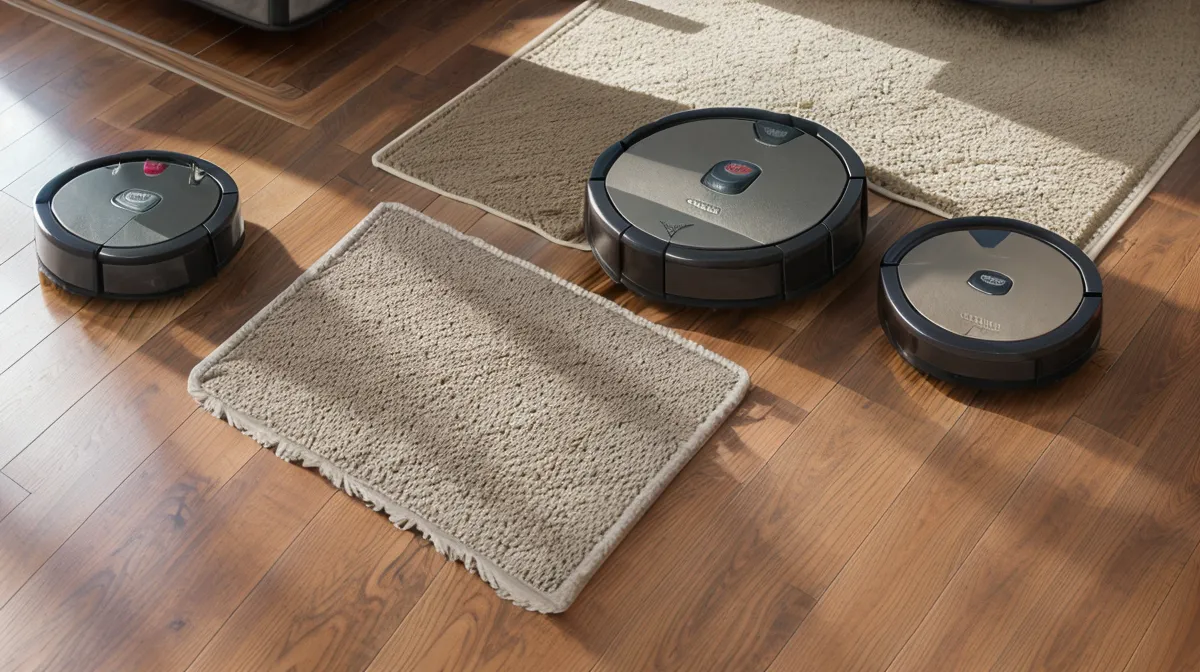
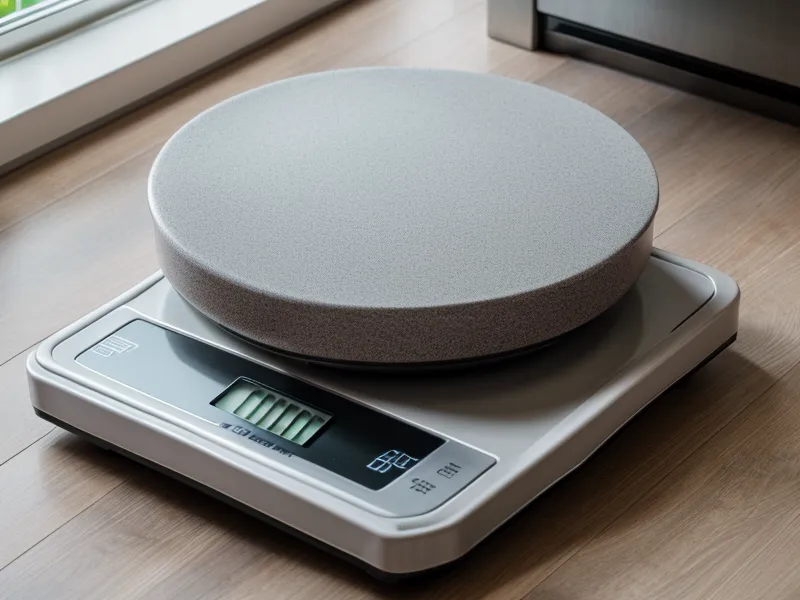
Eleven grams. That's the entire haul from the highest-suction bot in my rotation after a full hour working the hallway runner and the kitchen's hardwood border — barely enough fluff to register on the kitchen scale I use for the dustbin tally. The box on that bot promised a bigger Pascal number than anything else I own. The scale told a different story: most of that hour wasn't spent cleaning, it was spent backing out from under a dining chair leg, trying again, and eventually wedging itself against the baseboard until I crouched down to free it. Murph watched the whole rescue from the hallway rug with his usual flat judgment. Sam walked by with his coffee and just asked, "Why does the expensive one need help again?" That gap between the spec sheet and the scale is the whole obstacle-avoidance-versus-suction argument, and after this much smart home testing across two shedding dogs, I've landed firmly on one side of it.
The Tumbleweed Math That Didn't Add Up
We live in a 1920s bungalow, which comes with character and, it turns out, a lot of corners for a robot to get genuinely stuck in. Two shedding rescues work against the floors every day — Murph's husky undercoat shows up everywhere, and Beans trails a quieter layer of dander behind him room to room. Neither of those is an unusual problem for a house with pets. What surprised me, once I started actually weighing dustbins instead of trusting the apps, was how little any of that fur had to do with motor strength.
Most of the people who ask me about this — a reader here and there, plus the occasional acquaintance who corners me at one of the Mass Ave coffee shops where I do half my freelance writing — assume the fix for pet hair is raw power. They see an "8,000Pa" sticker on a box and figure a bigger number means a cleaner floor. After testing a long string of these machines, funded mostly by returns and refurb deals, I think that number is one of the least useful things on the label. I walked that same hallway in sock feet once a high-Pa model called its run finished, and the hardwood still felt gritty under my feet — the kind of grit you only notice once you stop trusting a screen that says the job is done.
Why Pascal Numbers Lose to Obstacle Avoidance
Before any of this turned into an actual tracking project, I kept a handheld Dyson parked on the basement stairs for manual spot runs between robot cycles. It felt proactive. It just meant I'd added a chore to my week instead of removing one, and the real fix was never going to be a second vacuum; it was getting the robot to stop needing rescue missions in the first place. The brush roll plays into this too: rubber-fin rollers shed hair more easily than bristle rollers once two dogs are in the mix, though the mechanics of that are a deeper rabbit hole than this comparison needs.
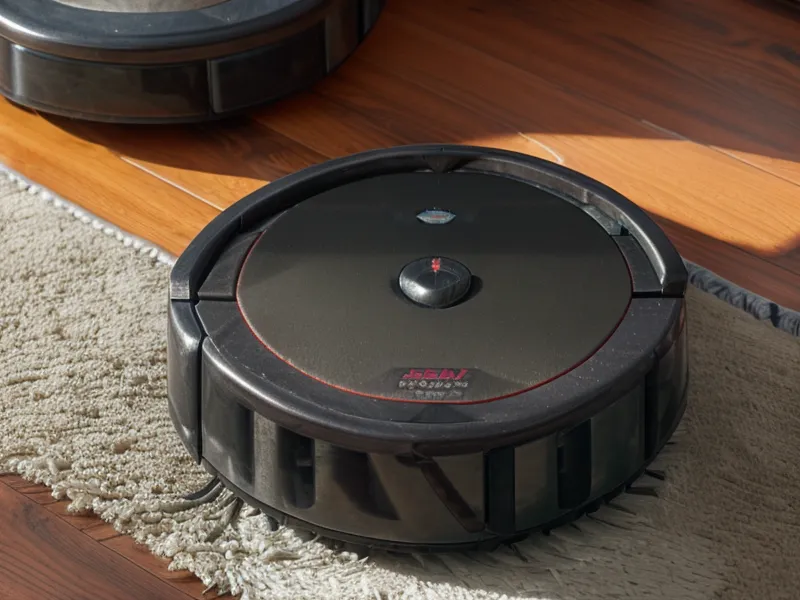
The bigger issue shows up when a strong motor meets zero spatial awareness. One early bot in my rotation ran over Beans's tail twice before Sam finally set up a no-go zone in the app — an app that, to even find the no-go zone setting, walked me through four unrelated onboarding screens first. Typical. The companion apps for these things are almost universally bad. Onboarding built like a Sephora checkout line. Settings buried two menus deep. A notification system that treats "bin full" and "stuck under a dining chair" as the same level of emergency.
Powerhouse Versus Navigator, Logged Side by Side
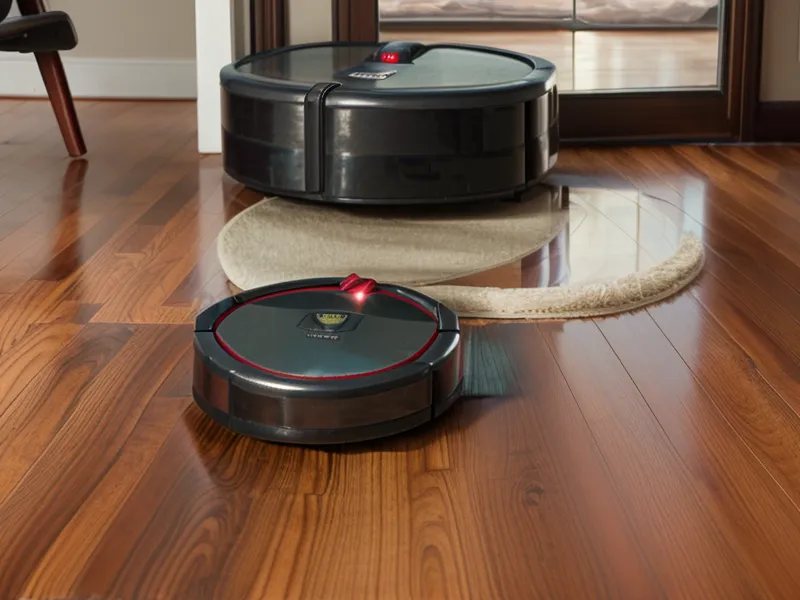
Eventually I set up a straightforward two-bot comparison and let it run. On one side, the "Powerhouse" — massive suction, basic bumpers, no real obstacle intelligence. On the other, the "Navigator" — noticeably lower suction, paired with a camera and LiDAR setup that actually mapped the room before committing to it. I logged how often each one got stuck, how much hair it collected per run, and how many times I had to physically walk over and restart it.
The results were embarrassing for the Powerhouse. It could pull more dirt out of a rug in a short, controlled test, but across the full comparison it only finished its scheduled run a little under half the time. The rest of the runs ended with a notification telling me it was stuck under the dining chairs or had eaten a charger cable. More than once, the motor had already changed pitch before I noticed anything on the log. My neighbor Reginald Crumpler, two houses down and a retired HVAC technician, caught it first. Because it kept failing mid-run, the Powerhouse's total weekly haul on the dustbin scale was lower than the Navigator's, even with its bigger number on the box.
An occasionally finicky 2.4 GHz Wi-Fi link was the Navigator's one real weak spot, mostly in the back of the house where the signal got thin. But its ability to actually see a dog toy and steer around it changed everything about the run. It didn't matter that the suction rating was lower on paper, because it kept moving instead of stalling out, and it covered more real floor as a result. Battery life against suction is a related trade-off I've tracked in a separate comparison of which self-emptying robot actually survives a two-dog house; here, neither bot ran out of charge before something else stopped it first. How accurately a bot maps a room on the first pass is its own rabbit hole too, and not one I'm solving in this post — what mattered for this comparison was simpler: did it see the obstacle at all.
When the Sensors Earn Their Keep
Watching the Navigator approach a pile of shoes by the door one afternoon was the clearest version of the whole argument. Instead of ramming into them the way the Powerhouse would have, it slowed, mapped the edges, and worked around them — the same bot that still announces itself with a start-up chirp that ricochets off the oak trim in the front hall every single morning.
LiDAR has its own blind spots, and low-contrast situations — a dark sock against a dark rug, say — could still trip the Navigator up where a human eye wouldn't miss it. It wasn't perfect around rug edges either; fringe is still fringe. But it recovered on its own instead of calling for a rescue, which is the part that actually matters. Fix a sensor gap in the app's settings, and the hardware does its job. Leave it unfixed, and even great hardware stalls out on a problem a person could solve with one setting.
Sam noticed the house felt cleaner once I stopped shopping by motor spec, and he noticed the air felt better too, which probably has more to do with the Navigator's HEPA filter than its motor. That filter deserves its own deep dive, and it already has one elsewhere in my notes — here it's enough to say it pulled its weight without anyone talking about it.
The Pet Hair Problem Winner
A reader named Fabiola Tobin emailed me after a different post to ask something close to this exact question: she'd been stuck in a return loop with a Black Friday buy and wanted to know if the higher-suction replacement she was eyeing was actually the better pick, or if she should be chasing something with smarter navigation instead. I pointed her toward the same logic I laid out in the unofficial husky-owner guide to not killing your fourth robot vacuum: the hardware is only half the battle, and if the navigation fails, the suction number stops mattering.
If you want one robot-vacuum tip out of this whole tracking project, it's this: choose the high-suction bot when your floors are mostly open and bare, with nothing lower than a coffee table for it to fight. Choose the obstacle-avoidance bot, every time, when you've got toy clutter, basement stairs, dining chairs, or a dog who treats the hallway like home base. Stop chasing the bigger Pascal number and start asking what happens when the bot meets something it didn't expect. That's the pet-hair-management question that actually predicts how clean your floor looks a week from now, not the number printed on the box.