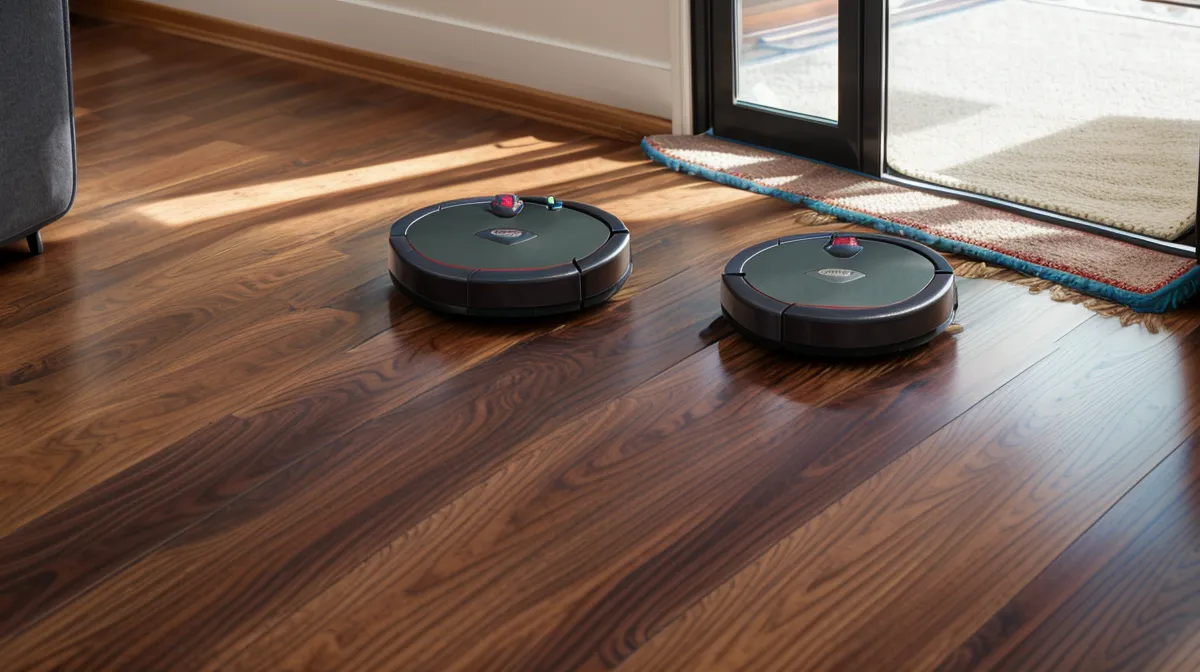
A five-hundred-dollar robot vacuum with "AI-driven obstacle avoidance" loses fights against mahogany trim that's been on this floor since 1924. That reality sits underneath every robot vacuum review I write, and once you've watched enough smart home fails pile up in a house with two shedding dogs, the pet hair solutions and the user experience problems turn out to be the same thing wearing different clothes.
Here's the short version: navigation gets worse, not better, as a bot gets "smarter," because every extra sensor is one more way to misread a floor plan built in 1924. That's not really a software bug. It's a design one — the bot isn't broken, it's guessing at a room it doesn't understand, and craftsman bungalows are exactly the kind of guess these things get wrong.
The User-Experience Problem Behind "Smart" Navigation
Readers ask me constantly whether mapping accuracy holds up the same everywhere, and it doesn't. Most LiDAR systems get built and tuned for open-concept new construction, not for a house with load-bearing walls chopping every room into a small box. My place has original hardwood through the main rooms and the hallway, one long runner rug down the center of that hall, and transition strips between rooms that throw a specific plastic clack every time a wheel catches one. When a bot's internal map stops matching that layout, it doesn't fail gracefully. It just stops trusting its own sensors and starts avoiding anything it can't classify cleanly — including furniture it's cleaned under a hundred times before.
The sectional is the worst offender. I measured it once: about three inches of daylight between the frame and the floor, enough for a bot to physically fit under, but not enough for it to commit to going in. Cheaper bots with less obstacle-avoidance logic just barrel underneath and get the crumbs. The expensive ones treat that gap like a decision they'd rather not make, and most of the time they decide not to make it.
Does a Husky Shed More Than the Bot Can Handle?
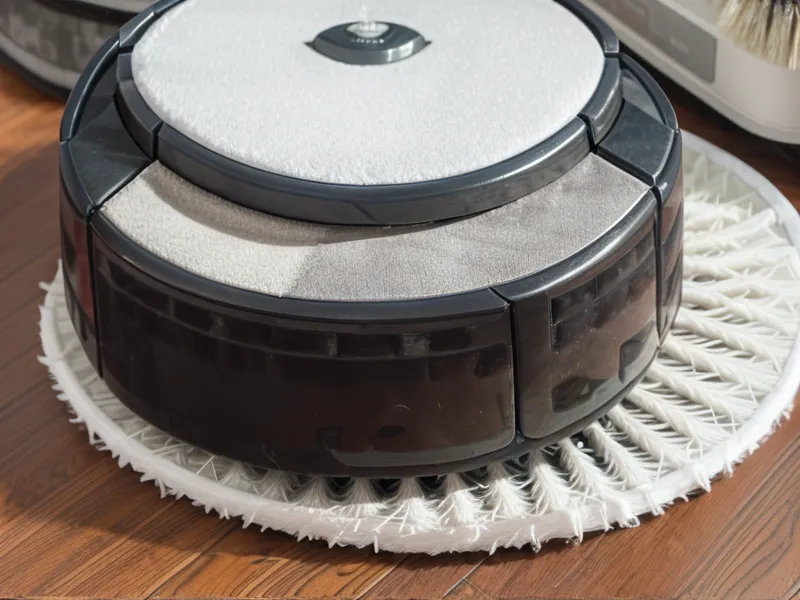
Murph is a husky mix, so shedding is basically a permanent weather event in this house, even after we've burned off some of that energy walking the loop near Garfield Park Conservatory. Beans, my senior beagle, has reached the point where he won't move for a machine no matter how many times it bumps into him. That combination is rough on brush-roll tangle resistance — hair wraps differently around a dense husky undercoat than it does around a beagle's shorter coat, and a bot that handles one well doesn't automatically handle the other. A friend a few streets over breeds Bernese mountain dogs, and when we compare dustbin weights after a run, her numbers make Murph look like a light shedder, which tells you this varies by breed at least as much as it varies by bot.
Pet-waste avoidance gets marketed as the flashy feature, but the more common failure in my house is simpler than that. One bot decided Beans was a permanent fixture the first time it bumped him mid-nap, mapped him as furniture, and quietly skipped that patch of floor on every run after — until I went in and cleared the map myself. It also ran over his tail twice before Sam finally set a no-go zone around his usual napping spot. "I think it's declared war on the dog," Sam said, which is about right.
Runner Rugs Confuse Expensive Sensors More Than Cheap Ones
Rug edges are where the pricier sensors lose their nerve. A raised edge on a thick runner reads to some LiDAR units as a wall instead of a texture change, so the bot stops, backs up, and leaves without cleaning anything. A dumber, cheaper bot just climbs the edge and deals with it. I've gone deep on why that specific failure happens in why your robot vacuum keeps choking on your area rugs, so I won't repeat all of it here, but the short version is that carpet-deep-cleaning settings and rug-edge detection are usually fighting each other inside the same firmware.
Noise is the other thing nobody mentions until they're living with it. Out of curiosity, I held a NIOSH-based sound meter app over the runner rug mid-cycle, and the reading climbed to 68 decibels — loud enough that I gave up trying to take a phone call while the bot worked that hallway. Hardwood reads quieter every time. The rug just gives the brush roll something to fight.
Air Purifiers and Detectors: The Same Navigation Drama, Different Devices
People assume this navigation drama is unique to vacuums, but it shows up in different forms with the other devices in this house. Air-purifier placement matters more than the filtration grade in a room with a doorway to the hall, since a unit tucked in the wrong corner just recirculates the same stale air. HEPA filtration grades look great on the box, but a clogged intake packed with a summer's worth of undercoat will tank real performance no matter what the rating claims — I've weighed enough of that gunk on my kitchen scale to know a clean filter beats a high one every time. Smoke and CO detectors have their own version of the sectional problem, too: detector interconnection sounds great until one unit false-alarms overnight and wakes the whole house instead of just the room with the actual issue, and filter-replacement cost adds up fast enough that it now factors into which unit I'd actually recommend, not just which one tests best on day one.
Judging When 80 Percent Clean Is Good Enough
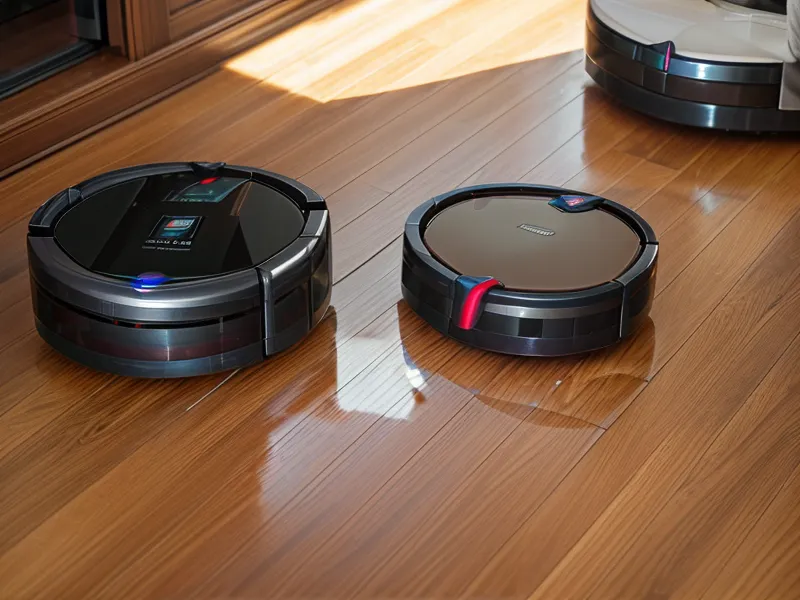
Suction-versus-battery is the trade-off most buying guides skip past, but it decides whether a bot actually finishes a floor. A unit that hits hard for a few minutes and then limps home mid-room isn't more effective than a gentler bot that clears the whole layout in one charge. Add a mop plate and the trade-off gets worse — the mop-versus-vacuum tension means the extra weight and water tank eat into exactly the maneuverability you need to clear a three-inch gap under a sectional.
I tried working around the gap myself for a while: running a sticky lint roller over the couch cushions and the exposed edges between every vacuum cycle, so at least the visible fur wouldn't pile up while the bot avoided the area. It helped for about a day before Murph resettled into the same spot and undid it. Some messes don't have a workaround. They just need a robot that does its actual job.
Cliff-sensor reliability isn't abstract for me, either — the stairwell down to the basement opens right off the kitchen with no permanent gate, so a bot that misjudges an edge there is a genuinely bad afternoon, not just a stuck-under-the-couch inconvenience. The companion app for the bot that handles that hallway best is still the worst part of owning it: onboarding wanted my Wi-Fi band, my email, and a "cleaning goals" quiz before it would even pair, more Sephora checkout than home appliance. I closed it and reopened it twice before it recognized my router.
The dustbin tally exists for exactly this reason. A bot that looks great in a fifteen-minute demo can still be the one stuck under the couch by dinner, which is why I keep the tracking tally of which high-end robot vac actually survives running instead of trusting a single review. "Which one's in timeout today?" Sam asks most evenings, and I usually have an answer ready before he finishes the question.
What Does My Neighbor Across the Alley Actually Report Back?
Yusuf, my neighbor across the alley, asked me which bot to get after he spotted me hauling a box out to the car, and he's the rare person in my life who reports back unprompted. He went with the higher-end option I pointed him toward, the one with the mop plate, and he still texts me when it does something new, good or bad. That kind of unprompted long-term reporting is worth more than a spec sheet, because it's the only way to know whether a bot's reliability holds up once the novelty wears off and it's just another appliance sitting in a hallway.
Buy for the Floor Plan, Not the Spec Sheet
My actual rule, after all of this, sounds almost too simple: buy for your floor plan, not for the spec sheet. A cheaper, less "aware" bot that reliably finishes a small, walled-off craftsman layout beats an expensive one that maps beautifully and then refuses to touch a third of the house. Open sightlines and low shedding mean the fancy navigation earns its keep. A layout like mine means prioritizing a low profile, a wide clearance tolerance, and a bin that doesn't need emptying after every run. I put the fuller version of how I handle floors and air together in the shed-heavy household survival guide, since one without the other only solves half the mess.