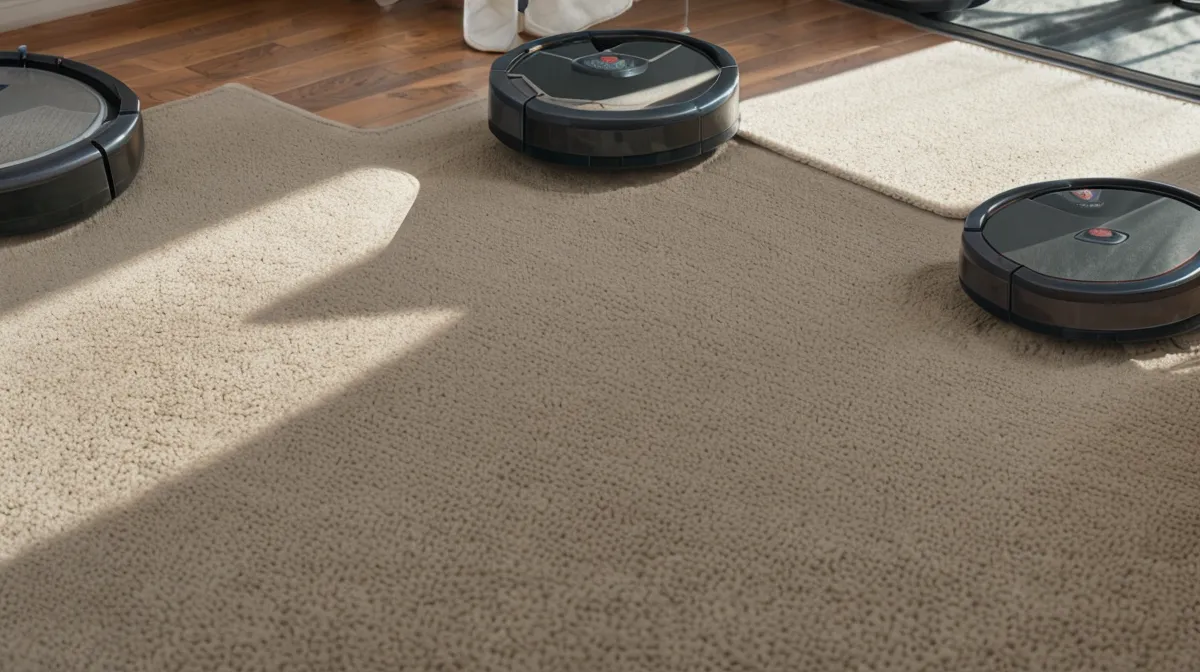
A strong motor and a smart floor plan are not the same thing, and mixing them up is the single most expensive mistake in robot vacuum shopping. Every robot vacuum review out there obsesses over suction wattage like it's the only variable that matters for pet hair, but the dustbin tally I keep on our two shedding dogs says otherwise. The bots that actually finish a run in this house are the ones that navigate well, not the ones that suck hardest. That distinction matters even more once you add an air purifier comparison into the mix, because the dander problem floating overhead and the hair problem stuck to the floor get solved by two completely different machines.
Quick disclosure before the spreadsheet talk: I earn a commission if you buy a vacuum or detector through a link in this post, at no extra cost to you. Every pick here has sat in my 1920s bungalow getting hair-tested by Murph and Beans, not pulled off a spec sheet, so take the praise and the complaints both as earned.
Pet Hair Isn't a Suction Problem
Here's the myth: buy the robot with the biggest suction number and the fur problem solves itself. In practice, cranking suction higher just drains the battery faster, so a bot built around brute-force power often dies mid-room instead of finishing the deep-clean pass it was supposed to make on our high-pile bedroom rug. What actually determines whether a bot finishes this floor plan is whether it can map the space accurately enough to know where the rugs, the thresholds, and the furniture legs actually are.
That's especially true at rug edges, where a surprising number of bots read a thin runner's lip as a wall and just stop rather than climbing it — I've got a whole separate breakdown on why your robot vacuum keeps ghosting your area rugs if that's the specific wall you're hitting. Our own runner in the main hallway has eaten more cleaning cycles than any dog toy Murph's left in the middle of the floor, which is its own obstacle-avoidance headache most spec sheets never mention, and the low-slung sectional in the living room — a few inches of ground clearance, max — rules out any bot that can't flatten itself to get under there at all.
The LG CordZero Robot is the one that actually earns its keep here. Its three-stage suction pulls Murph's undercoat out of that same runner rug without stalling, and the brush roll holds up far longer than most of what we've tested — about ten runs before it needs a manual unwinding, which is the best tangle resistance in this group. Onboarding was the least painful of the bunch too, the kind of setup flow that doesn't make you create an account just to tell it your Wi-Fi password. It still doesn't get bristle-tight into every corner of our craftsman trim, but it gets closer than anything else we've run.
Where Robot Vacuum Mapping Actually Breaks Down
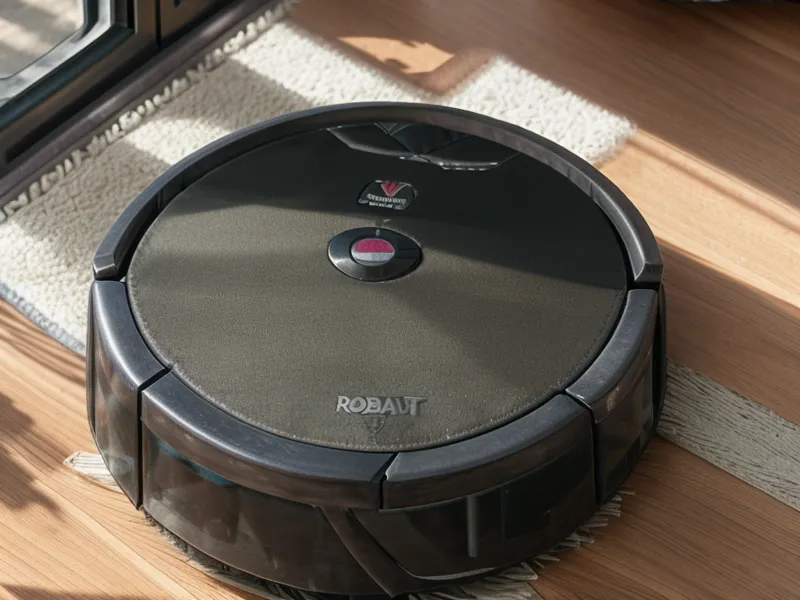
Mapping speed is where the Roborock S8 Pro Ultra pulls ahead of everything else in this group — it locked in our floor plan by the second run, where the iRobot Roomba j7+ needed three passes before it would admit the dining room existed. That mapping speed comes paired with a mop pad that lifts itself off carpet automatically, which is really the mop-versus-vacuum tradeoff in miniature: the Roborock's self-cleaning mop base saves a step the LG's dock doesn't have, but it's a function you're only getting value from on the days you actually run a wet pass.
There's a real tradeoff buried in that mapping speed, though: the more precise the map, the more the bot seems to lean on the cloud to hold onto it. A reader named Brenley, who found the dustbin tally through a robot vacuum forum thread and now swaps floor-specific numbers with me, was the first to flag it when a companion-app update quietly wiped out everyone's saved cleaning boundaries overnight — mine included, the same week hers went. I've got more of that mapping-versus-privacy comparison written up in my LG CordZero vs Roomba husky shedding test, if you want the longer version.
Mapping breaks down hardest at edges you can't see from the couch. Our basement stairwell off the kitchen has no permanent gate, and it's the reason the original Roomba i3 — the one that started this whole tally — isn't around anymore. I'd put it on a daily timer so I wouldn't have to think about scheduling, and more than once I came home to find it dead three rooms short of its dock, battery drained, having wandered somewhere its drop sensors should have caught and didn't. It went down the stairs for good not long after. These days there's still one stretch of hallway, between the kitchen doorway and that same stairwell, where every bot we've tested, LG included, tends to give up — battery reading seventy-three percent, same corner, like the floor plan has a dead spot no firmware update fixes. Sam's the one who notices first; if a bot's been parked in that corner for twenty minutes, he'll say something before I even look up from my laptop.
Why the Roomba Still Earns a Spot in a Pet-Owner Cleaning Routine
The Roomba j7+ earns a very specific kind of credit, though not for mapping speed. Beans, our senior beagle, lost an argument with something in the backyard one night, and the j7+'s pet-waste avoidance did exactly what it's supposed to: it detected the mess and steered around it instead of smearing it across the hardwood. Its auto-empty base also has the tightest dock seal of anything we've run, with no leaked dust around the base, though the dustbin itself runs noticeably smaller than the LG's, so for the same square footage you're emptying it more often. The app wrapped around all of that is a different story — more of that mess is documented in my tracking notes on robot nav fails, including a subscription nag that resurfaces every couple of weeks no matter how many times you decline it, and a no-go zone editor that forces you to redraw your boundaries any time the floor plan re-saves itself.
Clearing the Dander: What the Air Purifier Comparison Actually Showed
While the robots fight the hair on the floor, the PuroAir HEPA 14 Air Purifier handles what's floating above it. It's rated HEPA 14, one tier above the HEPA 13 grade most machines in this price range ship with, and I noticed less morning congestion once it was running specifically in the bedroom — placement matters more than people assume, and I've written up a longer answer on where to actually put one in my guide on the best HEPA air purifier for pet dander. It didn't do much for the general dog smell that settles into the rugs, which is a different problem than the stuff you can see floating in afternoon light, but the decibel reading held up: my phone's NIOSH SLM app clocked it at 28 dB in sleep mode, quiet enough that it doesn't set Beans off. The one annoyance is that the replacement filter is proprietary, so when it needs swapping you're locked into PuroAir's own part instead of a cheaper third-party clone.
The X-Sense Needs a 2.4GHz Network to Work at All
The X-Sense Smart Smoke and CO Detector rounds out the setup, and in a 1920s house you don't skip fire safety to save a step. Pairing only works over a 2.4GHz Wi-Fi band, not the 5GHz most routers default to now, so I had to split our network just to get the hub talking to the units. That hub is also the whole point — a single unit without it is just a detector with nicer styling, since the actual smart features only kick in once multiple units are interconnected through it, which matters most in a two-story layout like ours where you want the upstairs unit to know what the kitchen one just saw. Placement ended up mattering as much as the hub: ours sits in the hallway outside the bedrooms rather than directly over the stove, which is what keeps a seared steak from triggering a 3am evacuation. The payoff is a push notification that fires about four seconds before the in-house horn, which is just enough time to silence a false alarm from my phone before the dogs lose their minds.
The Workhorse That Actually Finishes the Job
After all of this, the LG CordZero Robot is still the one I trust to actually finish without calling for help. It doesn't have the Roborock's mop-lift flourish or the Roomba's poop-avoidance party trick, but it also doesn't nag me for a subscription or lose its map the moment I move the coffee table. It's the one that just does the job, run after run, in a house that's actively working against it.
If you've got multiple shedding dogs and you're tired of getting a "robot stuck" notification mid-day, this is the one worth checking first. You can see the current listing for the LG CordZero here and decide for yourself whether it fits what your floor plan actually needs.
| Product | Rating | |
|---|---|---|
| LG CordZero Robot Editor's Pick | 9.4 | Read More → |
| Roborock S8 Pro Ultra | 9.1 | Read More → |
| iRobot Roomba j7+ | 8.8 | Read More → |
| PuroAir HEPA 14 Air Purifier | 8.5 | Read More → |
| X-Sense Smart Smoke and CO Detector | 8.2 | Read More → |
LG CordZero Robot
Pros
- + Three-stage suction actually pulls husky hair out of rugs
- + Auto-empty bin is the most reliable for large fur clumps
- + App onboarding is mercifully simple compared to competitors
- + Handles 1920s thresholds without getting high-centered
Cons
- − Higher upfront investment than basic DTC brands
- − Brushroll still needs a manual hair-clip every few weeks