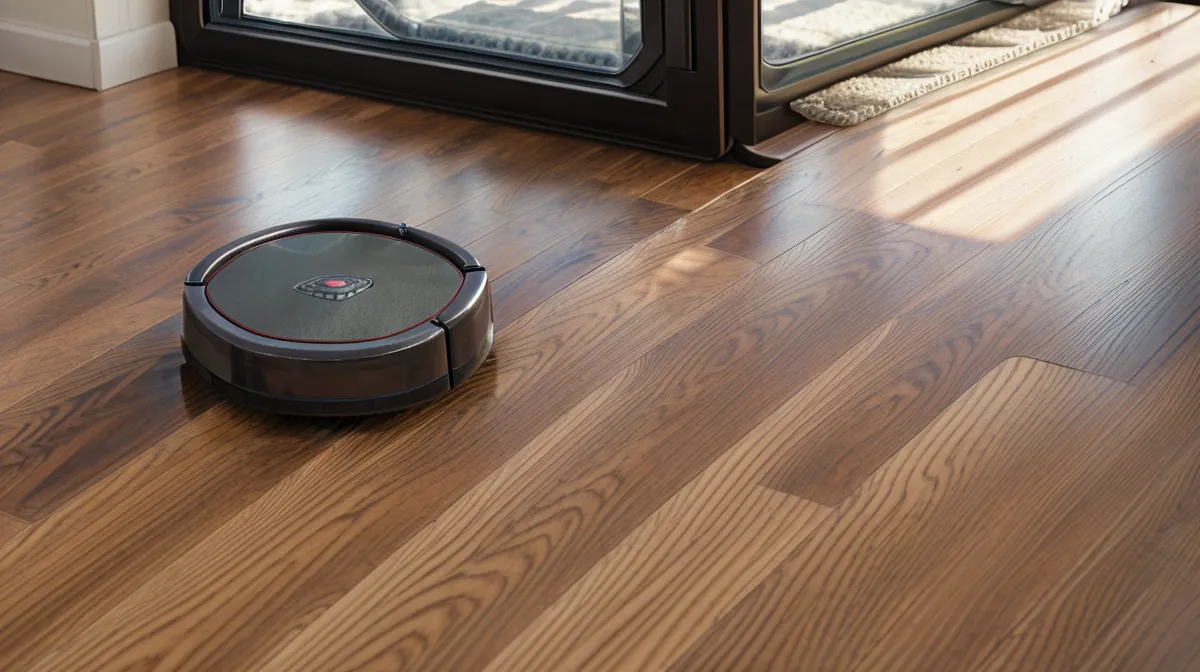
Five robot vacuums deep into the dustbin tally, the LG CordZero is the first one I didn't have to physically relocate to get decent coverage. Every bot before it earned at least one dock move within its first month here, usually out of frustration and never because I had an actual strategy. That number is the whole reason this one got a different kind of write-up.
Quick housekeeping before the pet hair numbers: I buy or borrow every robot vacuum that shows up in my notes, and a few of the brands linked here pay a commission if you click through and buy something - it doesn't change your price. Two years into logging this stuff on a kitchen scale and an iPhone decibel app, I've gotten pickier about which smart home gear earns a permanent outlet instead of a trial run in the closet.
Why the Dock Move Didn't Fix Anything
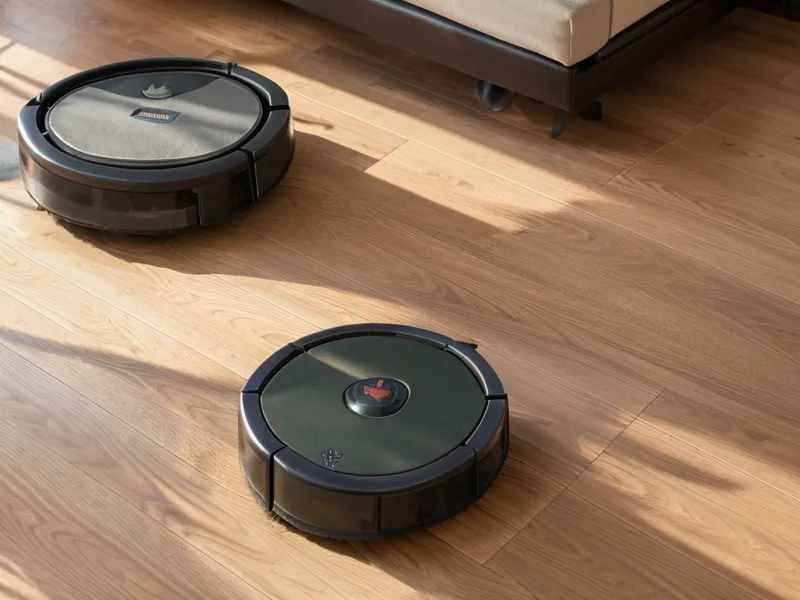
We're in a 1920s craftsman bungalow on the northwest side of Indianapolis, with Murph (husky mix, professional shedder) and Beans (senior beagle, professional floorboard-sleeper) supplying the raw material for every test. Most robot vacuum reviews treat pet hair as a volume problem — how many grams fit in the bin before the motor complains. Living with a dog who flinches at pitch changes turns that into a different question entirely.
Beans does not do well with sudden mechanical noise. Earlier bots that revved into a higher gear near the baseboards sent him off his bed and behind the bathroom door within seconds. A vacuum that leaves the floor spotless while putting an arthritic senior dog into a stress spiral twice a day doesn't pass, full stop — and that's a category most spec sheets don't even measure.
The dock move happened in week two, before I'd even call it a pattern. I pulled the CordZero's base out of its dining room corner and set it up in the hallway instead, on the theory that a more central spot would shave time off the coverage runs. It blocked the path between the kitchen and the stairs for exactly as long as it took Sam to trip over the charging cable once, and it didn't change how fast any room got cleaned. Back to the dining room corner it went.
Week five told me something the dock relocation never did. We'd taken Murph and Beans out to the dog trail at Broad Ripple Park and came home later than planned to find the basement door standing open — somebody hadn't latched it on the way out. The CordZero was stopped dead at the top of the stairwell, nose practically over the first step, doing exactly what it was supposed to do instead of what three of its predecessors would have done in that spot. That's the kind of unglamorous save that convinced me the LG CordZero Robot belonged in the regular rotation instead of the donate pile with the others.
Three Suction Stages Across Hardwood and a Runner Rug
The hardware gives you three suction stages, and the UX instinct behind that is right: three clear states beat six ambiguous micro-modes you have to guess at from an app icon. On the hardwood running through the living room and hallway, the lowest stage keeps a steady, low background hum — nothing that sent Beans scrambling, and nothing I needed the decibel app to argue about twice.
On the runner rug down the main hallway is where lesser bots either stall at the edge or gun the motor hard enough to startle anyone sleeping nearby. The CordZero's drive wheels climbed onto it without the shrill wheel-spin whine I'd gotten used to from older bots. "It just went up," Sam said, not looking up from the laptop at the kitchen table until the bot had already cleared the rug, apparently expecting more of a show.
Underneath the sectional is where most robots give up — ours sits at roughly three inches of ground clearance, which has eaten more than one bot's sensor turret over the two years I've been doing this. The CordZero's lower profile slid under without triggering a stuck-bot alert mid cycle, which is the specific, boring kind of win that actually matters for a pet hair robot vacuum in a house built on uneven floors.
The Auto-Empty Tower Earns Its Keep, the Brush Roll Still Doesn't
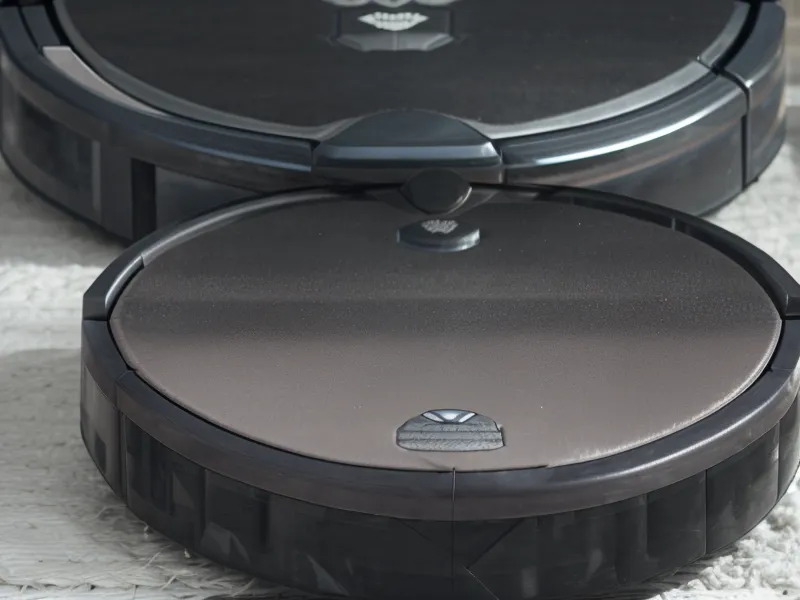
Three weeks of daily runs is enough to stress-test any auto-empty tower against husky undercoat, which tends to felt together into a solid plug that jams lesser intake tubes. The CordZero's tower cleared that plug every time, no manual unclogging required — a different story than some of the other docks I've put through the same test, which gets its own full accounting in my notes on living with multiple robot vacuums in a shedding household. Weighing the bin afterward is still part of the dustbin tally, and the kitchen scale number won't settle on the first try — it rocks between two digits for a second before landing, same as it does every time the bin's genuinely full.
Getting the CordZero to stop treating the open basement stairwell like a room worth cleaning took its mapping engine three full passes before it gave up trying. After that it respected the boundary on its own, no virtual wall required. That's a narrower question than overall mapping accuracy, which matters more in houses with a dozen small rooms than in ours, but it's the one that actually decides whether a bot is safe to leave running while we're out.
The tower runs exhaust through a HEPA-rated filter before any air goes back into the hallway, which is about as far as I'll go on the filtration side here — the deeper filtration-grade comparisons live in other notes, not this one. Maintenance is where the marketing copy stops being honest. One morning last month the app flagged a brush stall, and I found myself on the hallway floor with kitchen scissors, picking long human hair out of the roller spindle after assuming the rubber fins made it tangle-proof. They don't, not entirely — human hair finds the spindle axle eventually, usually somewhere around the ten-run mark, which tracks with what I dug into for what a year of husky shedding taught me about brush rolls.
Does the App Actually Get Out of Your Way?
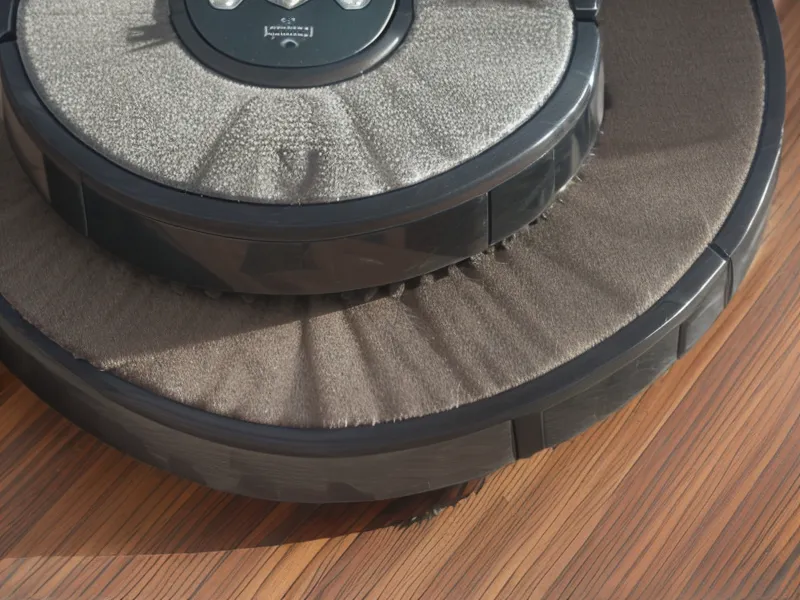
Setting up a new vacuum's companion app is usually the part of this job I dread most. Most of them are built like a retail checkout designed to extract one more data point before you're allowed to vacuum your own living room — location access, a loyalty pitch, scheduling buried three menus deep. The iRobot Roomba j7+ app leaned hard into subscription prompts during setup, enough that I texted a screenshot to Colette Morrow, the UX friend I message whenever an onboarding flow does something genuinely indefensible. She agreed it was bad. She usually does.
The LG app setup, by contrast, didn't ask for much. It paired over the bungalow's 2.4GHz band on the first try, without insisting I disable the 5GHz channel or retype the Wi-Fi password four separate times. Drawing a no-go zone around Beans's corner bed took about two minutes, and the map stayed put after the bot bumped a chair leg instead of wiping itself and starting over. For a piece of smart home gear that otherwise behaves like every other app in this category, that restraint stood out.
It's worth saying the Roomba earns real credit elsewhere — its pet-waste avoidance actually worked the one time it mattered, which is more than I can say for its app. For how the CordZero's mechanical cleaning stacks up against the air-filtration side of this house, the fuller breakdown is in my husky glitter tally across vacuums and air purifiers.
Where the CordZero Landed in the Tally
Seven months in, the CordZero is still plugged in at its original spot in the dining room, which by this household's standards counts as a resounding endorsement. It hasn't gone down the basement stairs, hasn't smeared anything across the hallway runner, and hasn't put Beans into a panic on a random Tuesday. The price sits well above the budget alternatives I've tested, and no amount of good app design changes that math for every household — check current pricing before deciding the gap is worth it to you.
If there's one thing two years of this tally has actually taught me, it's that dock placement matters less than whether a bot can be trusted not to need a dock relocation in the first place. Move the dock enough times and you're not testing a vacuum anymore — you're just rearranging furniture around a machine that hasn't earned its spot yet. For a high-shed, uneven-floor household with animals that need predictability, the LG CordZero Robot earned its spot by simply not making us think about it.