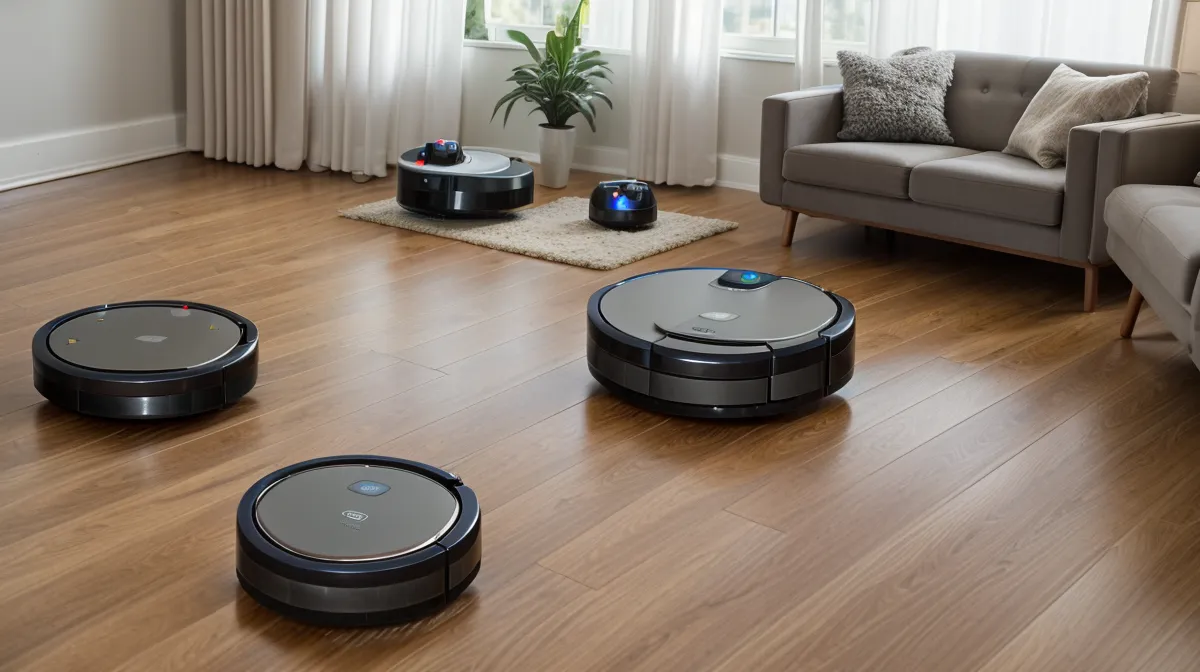
A robot vacuum dies differently than a stick vacuum; it doesn't break, it just stops answering the app mid-room. I've watched a bot nose up against a half-open basement door, wheels chattering right at the top step, and felt my stomach do the thing it does watching someone lean too far over a subway platform. That's the bar every robot vacuum in this house has to clear before I care how much pet hair it pulls out of a rug.
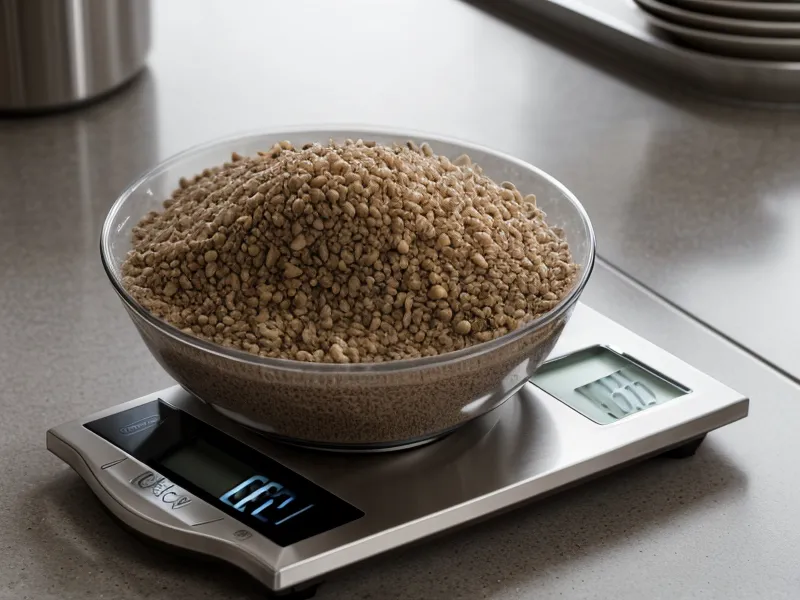
Quick disclosure before any of that: I earn a commission if you buy through the iRobot or Roborock links below, same as I would through the PuroAir or X-Sense ones further down. None of that changes what gets said here — I weigh dustbins on a kitchen scale and write down what actually happens, not what a press kit says should happen.
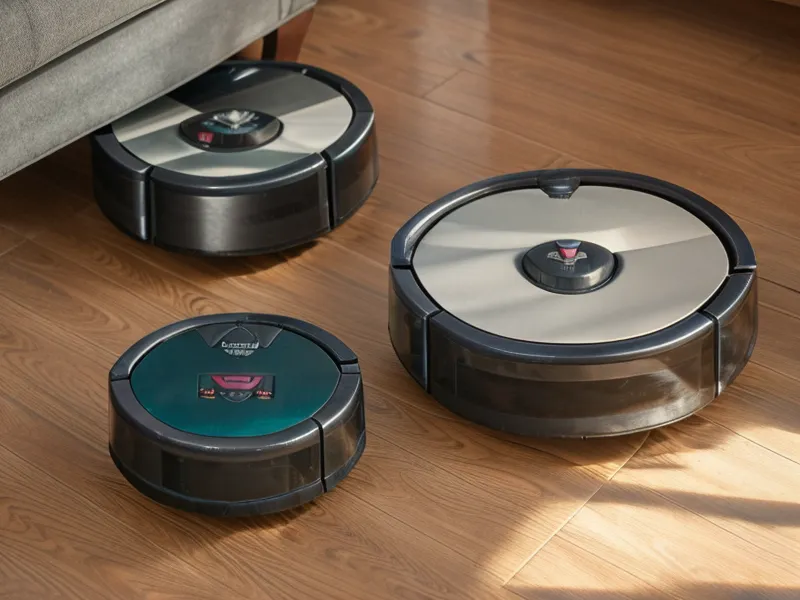
Two robots have earned a permanent slot in the pet-hair rotation of this house on that edge-case basis alone: the iRobot Roomba j7+ and the Roborock S8 Pro Ultra. Comparing them isn't really about which one wins outright — it's about which failure mode you, personally, can live with in a house with two shedding dogs, a cluttered floor plan, and a smart-home app that will annoy you eventually regardless of brand.
What the Roomba Gets Right Without Trying Hard
Start with obstacles, because that's the daily test in a house with a husky mix and a senior beagle underfoot — toys, chew bones, and occasionally worse are just part of the floor here. The iRobot Roomba j7+'s poop-avoidance feature did the one job it needed to the time it actually mattered, steering around a mess Beans left overnight instead of grinding it into the hallway; how consistently that holds up across dozens of runs is a longer story I've told in full elsewhere.
Where the j7+ actually separates itself is the auto-empty dock. The seal on the bin is the tightest of anything I've run, and the lid lets go with a small metallic snap after a longer job, like a lunchbox latch giving way. That matters because I also run a PuroAir HEPA 14 Air Purifier to catch the dander this crowd generates, and a vacuum that leaks fine dust back into the room during its own empty cycle just hands the purifier a bigger job. I'll skip the HEPA-grade specifics and the placement math for where a purifier actually earns its keep — both live in their own posts — but a dock that seals well is doing air-quality work most people never credit. For the fuller dust-management picture of this house, there's PuroAir HEPA 14 Review for Managing Dust in a Craftsman Bungalow.
Why the Roborock Cleans Faster, and What It Costs You
Switch to the Roborock S8 Pro Ultra and the personality changes entirely. Sam noticed the mop pads lifting cleanly off the rug the first time he watched a cycle finish nearby — "huh, it actually knows the difference," he said, which is a bigger compliment than it sounds like coming from someone who mostly rolls his eyes at my dustbin tally.
Which bot maps a floor plan faster is genuinely its own rabbit hole, one I go down in more detail on another post; the short version for these two is that the Roborock had the layout locked in two runs earlier than the Roomba did, and that head start shows up in cleaner edges along the baseboards from day one.
The dual-roller system is the other reason to consider it. Our low-pile carpet holds onto husky fluff by weaving it into the fibers rather than leaving it on top, and the Roborock's rollers pull out strands the Roomba leaves behind. Whether that extra suction comes at the cost of battery life is a fair question, and it's one I answer in full against the LG CordZero Robot Vacuum, which has the calmer, less painful app onboarding of anything I've tested. For carpet-heavy houses specifically, I'd point you toward best robot vacuum for thick carpet and heavy shedding dogs before committing to either of these on that basis alone.
Which App Makes You Want to Throw Your Phone?
Memory is where the Roomba actually struggles, not cleaning. Twice now it has decided the floor plan changed, quietly wiped out the no-go zones I'd drawn by hand, and gone straight back to getting stuck under the sectional. I tried moving the charging dock into the hallway once, on the theory that a different starting point would fix the coverage gap — it mostly just gave Sam a new thing to trip over, and the same rooms still got skipped.
It's not the only bot that hoards floor space in its head, either. I've gone into more detail on why the ECOVACS Deebot X2 Omni fits better under low sectional sofas elsewhere, and extra clearance alone doesn't fix a memory problem like the Roomba's.
The Roborock's app has a different flaw: it treats you like a captive audience. Notifications about an accessory kit you never asked about show up while you're just trying to set a cleaning schedule, and the interface has enough nested menus that it feels like someone crammed a CAD program into a phone screen.
Networking headaches aren't limited to vacuums, either. Getting the X-Sense Smart Smoke and CO Detector talking to the same 2.4GHz band as these bots took more patience than it should have, and exactly where in an older two-story home you mount a detector like that is a whole separate question I answer elsewhere. If mesh-network troubleshooting is where you're stuck right now, X-Sense Smart Smoke Detector Review covers the networking side in more depth than I can here.
The Trade-off, Stated Plainly
Strip away the app complaints and the actual trade-off is simple: carpet performance against clutter tolerance. The Roborock's dual brushes and stronger suction win on carpet, full stop — if the bulk of your shedding problem lives in a rug rather than on hardwood, it's the better tool for that specific job. Whose dustbin actually holds more fur per run is a separate, longer comparison I've run across six different bots elsewhere, so I'll skip the gram-by-gram version here.
Whether the mop function is worth the extra maintenance at all is its own argument — I make the fuller case against the Dreame and the ECOVACS elsewhere — but for the Roborock specifically, the mop is real rather than gimmicky, provided you don't mind a few extra minutes most weeks clearing hair off the roller ends.
My friend Colette, who freelances in UX the same way I do, will tell you two dogs and a rotating cast of test bots isn't a real sample size, and she's not wrong. What I can say honestly is that neither bot handles what Murph and Beans drag in after a walk down the dog trail at Broad Ripple Park — mud, burrs, whatever they rolled in — because that's a mopping-and-toweling problem no robot on this list solves on its own.
The counterpoint is obstacle handling. Run both bots back to back on the same cluttered floor and the pattern repeats itself: the Roborock finishes faster and leaves rugs looking better, right up until it meets a pair of shoes left in the hallway and calls for help. The Roomba takes longer and misses a bit more embedded hair, but it navigates around the same shoes without incident and empties itself without a fuss.
Pick the Bot That Matches Your Mess
Choose the Roborock S8 Pro Ultra if a deep carpet clean matters more to you than a calm app experience — budget an afternoon to actually learn the menus, and expect a few extra minutes most weeks freeing hair from the roller ends.
Go with the iRobot Roomba j7+ instead if your floor is more obstacle course than showroom — toys, cords, an unpredictable dog mess here and there — and you'd rather have a bot that reliably gets most of the hair than one that occasionally needs rescuing from a pair of shoes.
If dog toys and obstacle avoidance specifically are what's holding up your decision, How to Choose a Robot Vacuum for Dog Toys and Obstacle Avoidance goes deeper into the camera tech than I have room for here. And if dander is the part making you sneeze rather than the fur itself, the PuroAir HEPA 14 is the one purchase in this whole lineup I'd make without hesitation — it runs quiet enough in sleep mode that it isn't the thing waking the dogs at night, which in this house is a genuinely low bar to clear.
No bot on this list is perfect, and this comparison was never going to end with one unqualified winner. Match the trade-off to your actual floor plan — carpet depth against clutter tolerance — and either of these two will earn its keep in a house that generates this much fur.