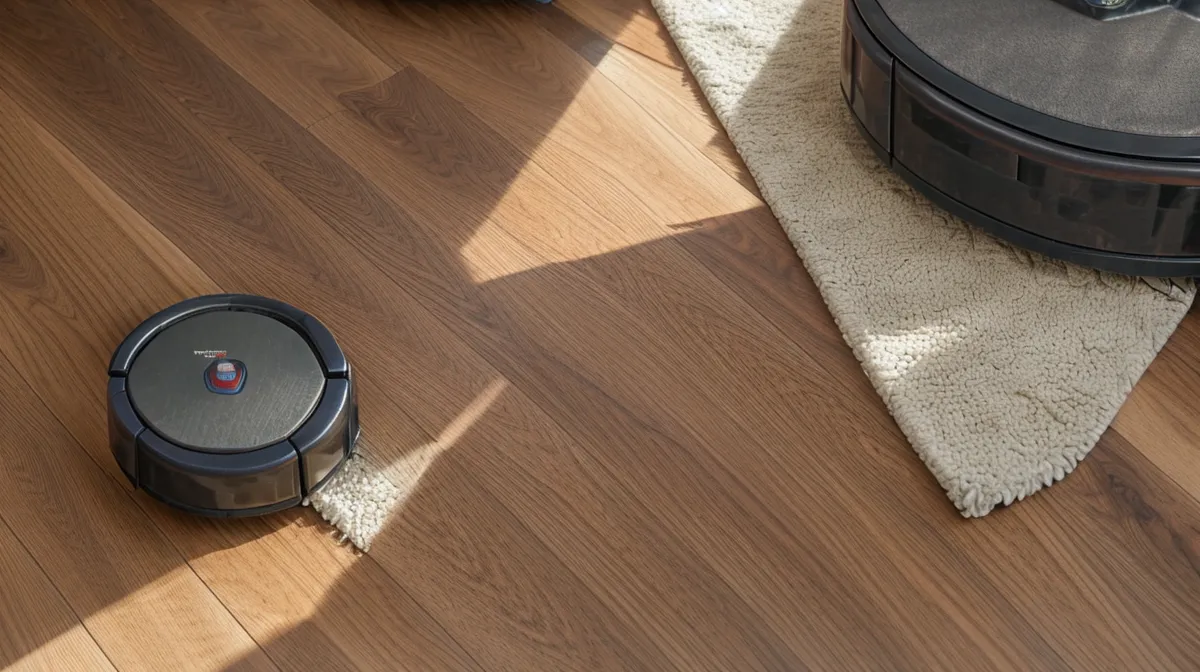
No matter how many times you vacuum the same stretch of hardwood, the dander keeps winning. Murph flops back onto that exact spot within the hour, and the fur builds right back up like the robot was never there. Clean floors and clean air turned out to be two separate jobs. I'd been paying one robot to handle both.
Quick disclosure before anything else: a few of the product links below are affiliate links, meaning I get a small cut if you buy through them, at no extra cost to you. Everything gets tested in our own house first — kitchen scale, dog hair, the whole chaotic setup — and nothing goes on this page unless it earned its spot with Murph and Beans actually living around it.
The Robot Vacuums Handle the Floor, Not the Dander Still in the Air
Our house is a 1920s craftsman on the northwest side of Indianapolis. Original hardwood runs through the main rooms, and a runner rug lines the hallway, catching whatever the floor vents don't recirculate first. Murph sheds enough husky undercoat to make a small blanket every few weeks. Beans, our senior beagle, sheds something finer — pale, dry flaking you only notice when the afternoon sun comes in low and lights up the room like a snow globe nobody meant to shake.
The dander is the actual problem, not the fur you can see. My LG CordZero earns its keep on the floor — the auto-empty bin goes about a full week before I have to deal with it. That sounds generous until you realize a full bin only means the vacuum caught what was heavy enough to fall. It does nothing for what's still floating. Mapping accuracy is its own spreadsheet in my tally, and not one I'm opening today.
Flip any of these bots over right after a run and you get the same warm, half-melted-plastic smell off the motor housing while picking hair out of the brush — a small tax on caring about this as much as I apparently do. Before there was any real tracking system, back when a fixed schedule still seemed like it could out-run the shedding, I set the old Roomba i3 on a strict daily timer. That ended with the i3 wedged under a neighbor's porch three houses down from its dock, having slipped out through a door that didn't latch. A timer doesn't fix airflow. It just gives a robot a new way to get lost.
Enter the PuroAir HEPA 14 — Without the Spec-Sheet Fight
When the PuroAir HEPA 14 Air Purifier showed up, I was ready to be annoyed by it. I've tested purifiers that turned out to be expensive window screens with a fan bolted on. Companies love slapping 'medical grade' on a box to justify the price — the same instinct behind the ECOVACS app trying to upsell me on something every time I open it, like a Sephora checkout flow that won't let you leave. PuroAir grades its HEPA filter a step above what most consumer units use. I'll save the grade-by-grade breakdown for a different post — that's its own rabbit hole. The difference showed up fast anyway, and it wasn't just marketing.
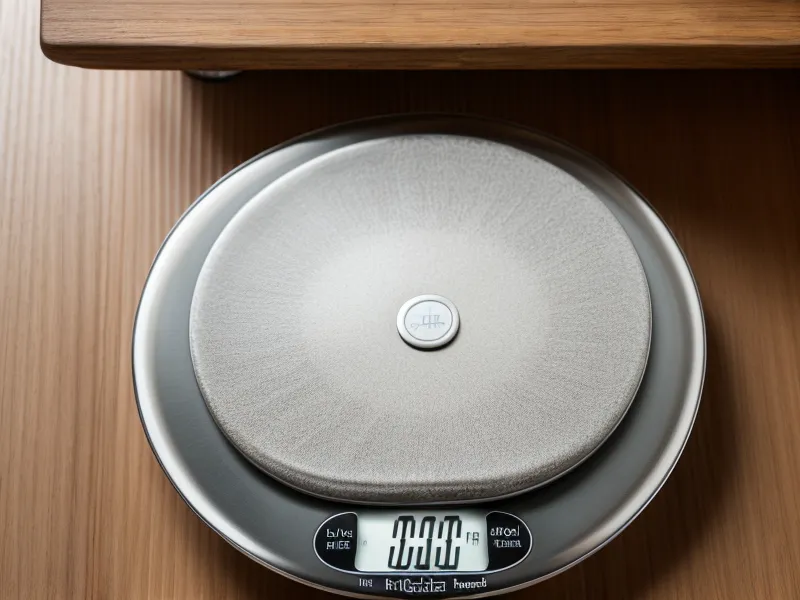
I weighed the used filter on our kitchen scale against an old Levoit we'd retired to the basement, mostly to have something to show Sam. 'Another box?' Sam said, and went back to his coffee. The scale didn't care about the eyebrow. The PuroAir was packing on grams of actual house grit noticeably faster than the entry-level unit ever had. Suction versus battery life is the trade-off that actually decides most vacuum purchases in this house — the purifier skips that argument entirely, since it just sits there and pulls air instead of driving around a floor plan.
For anyone working with a smaller layout than our bungalow, I got more specific about that in my PuroAir HEPA 14 Review for Eliminating Dog Smells in Small Homes. The placement math changes when you don't have four separate rooms fighting over one purifier.
Where the Purifier Actually Earns Its Keep
Most advice says to park a purifier next to wherever the dog sleeps. Makes sense on paper. Where you're supposed to put one of these relative to the room is a whole separate debate, and I'm not relitigating it here. In our layout, the thing that actually moved the needle was pulling the PuroAir off the corner by Beans's bed and setting it closer to the paths the iRobot Roomba j7+ and the Roborock S8 Pro Ultra run through the living room.
Every time one of the bots does a lap around the sectional, it kicks up whatever dander settled since the last run. The exhaust off the motor works like a small leaf blower on anything that hasn't landed yet. Obstacle avoidance is where the Roborock edges out the j7+, for what it's worth, though that's its own comparison for another day. Running the purifier near the high-traffic path instead of the bed meant it caught that cloud before it drifted back into the runner rug or settled onto the sectional — which, with maybe three inches of clearance underneath, is already hard enough to get a brush roll under without adding airborne dust on top.
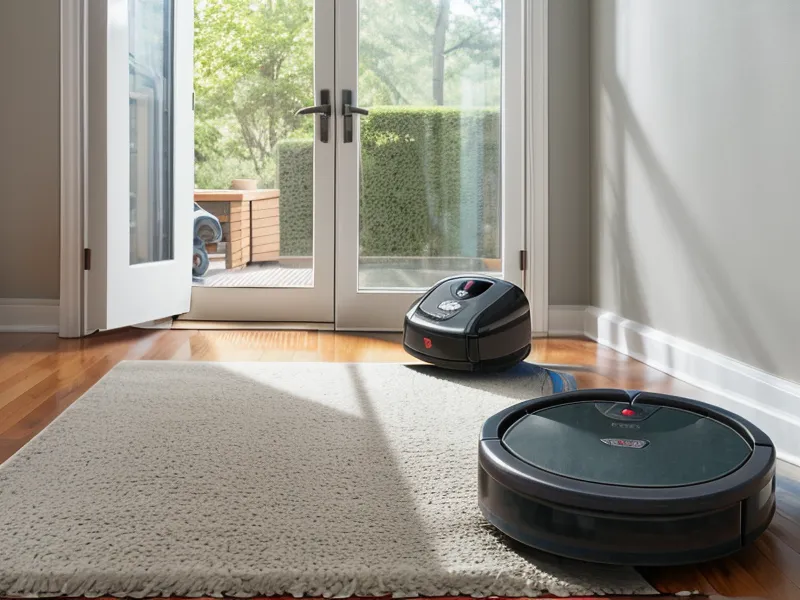
The j7+ earns trust on a different front. It dodged a real mess the one night Beans lost a midnight argument with a Greenie on the living room rug, no cleanup required on my end. That kind of reliability counts for more than most spec sheets. Whether the S8's mop function is worth the extra step over a plain vacuum pass is yet another trade-off. It's the same logic behind which robot actually survives the shedding in this house: you look at where the failure happens, not just where the mess starts.
The Smart-Home App Is Almost Nothing, and That's the Point
I spend my working hours obsessing over microcopy, so I have a short fuse for appliances that need a 2.4 GHz handshake just to turn on a fan. The PuroAir's app is barely there — a basic timer and not much else — which sounds like a knock until you've spent a week redoing the j7+'s boundary lines every time its map decides to re-save itself. Basic, in this case, counts as a feature.
Sound-wise, the sleep mode reads a steady 28 dB on the same iPhone NIOSH meter I use for everything else — quieter than Beans snoring on the rug some nights, and easy enough to leave running through an afternoon of client calls without anyone on the other end asking what that hum is. Setup, by contrast, took longer for the X-Sense Smart Smoke Detector than for the purifier, mostly over a 2.4 GHz-only pairing quirk — where those detectors ended up in our upstairs hallway is its own story for another time.
What Changed by Week Six
By the sixth week of that spring's heavy shed, the sunbeam test told a different story than it had back in November. The cloud that used to hang visible in the afternoon light for a good ten minutes after a vacuum run was down closer to two or three. Beans's sneezing eased off first, oddly, ahead of my own scratchy throat. Sam noticed the room had stopped smelling like old dog before I said anything about it — just mentioned it over coffee, no ceremony.
A dental hygienist up in Fort Wayne named Brenley Hessler found my dustbin numbers on a robotvacuums thread around then and messaged me about her own two Labradors. She runs her bots on laminate rather than hardwood, so her weight numbers land differently than mine, but she's been cross-checking her results against my tally ever since. Having someone else's floor type to compare against beats just trusting my own numbers in isolation.
None of this deep-cleans the runner rug itself — that's a separate fight — or fixes the rug edges where most bots still lose the plot regardless of brand. It doesn't touch the open stairwell off our kitchen either, which is exactly why we stay careful about which bot runs unsupervised there on a given day; that's a different reliability question than anything about air quality.
The One Lesson I'd Actually Pass On
If there's one thing worth taking from all this, it's to stop expecting a vacuum — robot or otherwise — to solve an air quality problem. It was never built for that job, no matter how good the brush roll or the mapping gets. Plenty of time has gone into picking apart the 'tangle-free' myth when it comes to husky hair, and the short version carries over here too: hardware built for one job doesn't quietly pick up a second job just because you want it to.
The PuroAir HEPA 14 isn't the flashiest thing in the house. It doesn't map the floor or send a notification when it finishes a run. What it does is handle the half of the mess none of the vacuums were ever built to touch — the part still floating after the floor already looks clean. In a hundred-year-old house with two shedding dogs, that's not optional. It's the difference between a floor that looks clean and air that actually is.
If the sunbeam test in your own living room is telling a similar story, start with the purifier before chasing a fancier vacuum. The floor was never the whole problem.